

A Guide to a Durable Timber Deck
Key Considerations for Long-Lasting Timber Decking
Timber decking remains one of the most popular outdoor features of the home. However, delivering a timber deck that performs long-term while exposed to weather, foot traffic and timber movement, takes some consideration. This guide outlines the key product considerations for building a durable, low-maintenance timber deck.
Timber Durability
Timber decking is rated by in-ground and above-ground durability classes, which indicate how well a species withstands decay, insect attacks and exposure to the elements.
Finding a timber species that can match durability to site conditions is important:
- Coastal environments require timbers with high moisture and corrosion resistance.
- High-moisture or shaded areas demand species that resist decay and mould.
- Bushfire-prone zones require resilient species that meet BAL ratings.
Choosing the correct durability class significantly extends the lifespan of timber decking and reduces long-term maintenance.
Choosing the Right Timber Species
Class 1 Hardwood Decking Options
- Merbau Decking: Class 1 durability with excellent moisture resistance, making it ideal for exposed or coastal decks. Note: Design deck around its high tannin content to avoid staining paving or concrete.
- Blackbutt Timber Decking: A strong, stable hardwood with good termite resistance and reliable performance. Ideal for bushfire-prone areas.
- Cumaru Decking: Extremely dense and highly durable imported hardwood with minimal tannin bleed and excellent wear resistance.
- Grey Box Decking: Exceptionally hard-wearing timbers suited to high-traffic or commercial decking applications. Note: Requires pre-drilling due to its denseness.
- Spotted Gum Decking: Popular for its strength, durability, visual appeal and relatively low tannin leaching. It’s a great all-rounder and ideal for bushfire-prone areas.
- Tallowwood Decking: Naturally resistant to termites, decay and moisture, making it well-suited to damp or shaded environments. Note: Requires pre-drilling due to its denseness.
Class 2 Hardwood Decking Options
- Jarrah Decking: A class 2 stable and durable hardwood with good resistance to weathering. It’s often selected for its rich red and brown colouring.
- Karri Decking: Moderately durable class 2 hardwood with a distinctive grain, suitable for protected or well-ventilated decks. Due to the size of Karri trees, this timber is available in long lengths.
Treated Pine Decking
Treated pine decking remains a cost-effective option for moderate conditions. While not as naturally durable as hardwoods, with correct treatment, spacing and ongoing maintenance, it can deliver a lasting timber deck.
Design Tips for Durability
Good deck performance starts with the design:
- Correct board spacing allows for natural expansion and contraction, reducing the risk of buckling or cupping
- Subdeck ventilation is critical to allow boards and framing to dry after wet weather, minimising decay and mould
- Effective drainage ensures water doesn’t pond on or beneath the deck, protecting the boards and substructure
- Check if the property is within bushfire and termite-prone areas to address requirements at the design stage.
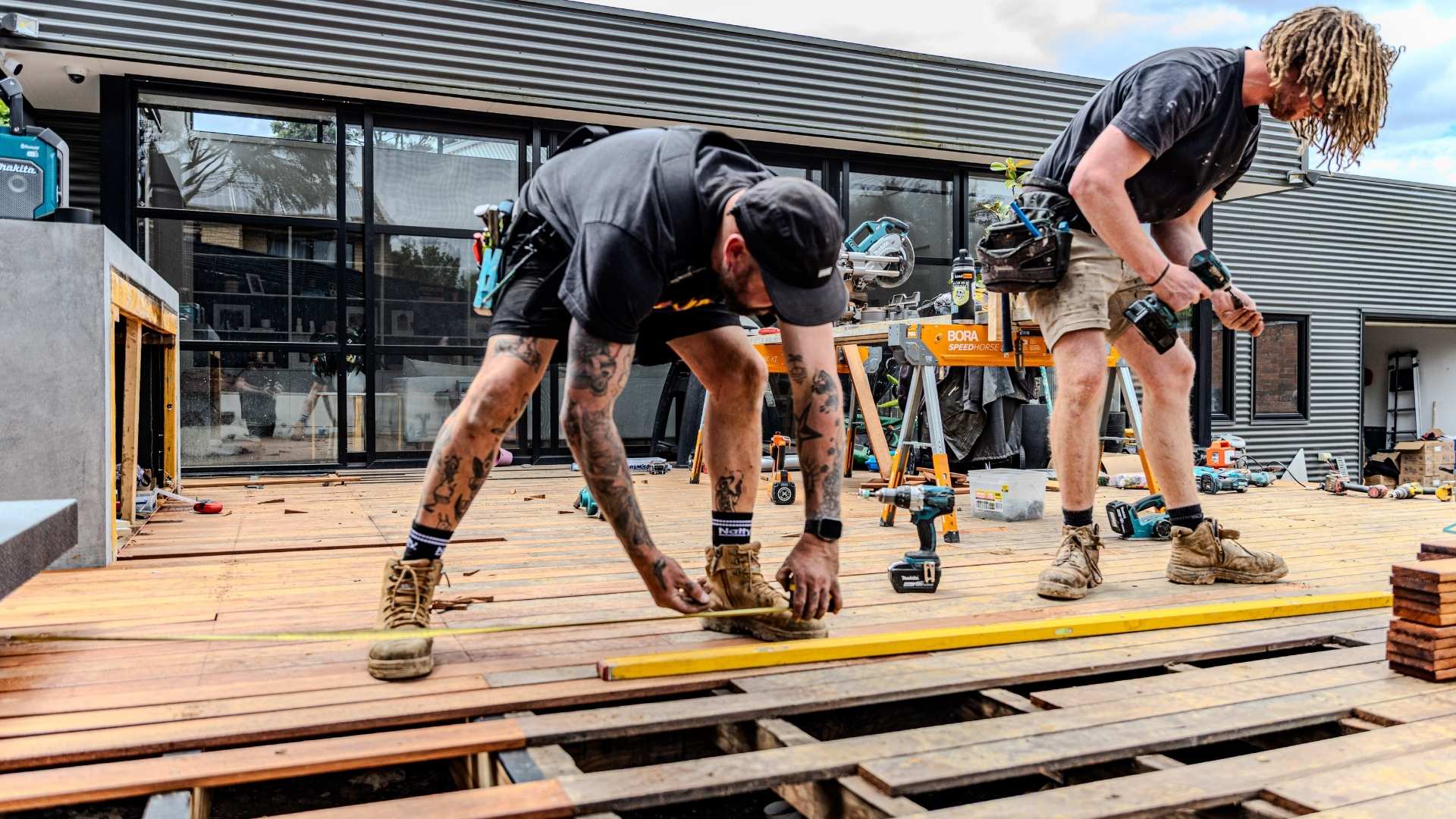
Protective Coatings
Timber decks require protection to withstand harsh climates.
- Providing protective coatings reduces moisture ingress, limits UV damage and slows timber movement
- Re-coating timber with oils, stains and protective coatings should be timed based on deck exposure and timber species
- Tannin-rich timbers such as Merbau should be properly weathered or washed before sealing to prevent staining and coating failure.
Correct finishing not only protects the deck but enhances its appearance over time.
Timber Decking at Bowens
Bowens offers a wide range of quality timber decking options, including Merbau decking, Blackbutt timber decking, Spotted Gum decking, and Treated Pine decking.
For more information, feel free to contact your local Bowens store or visit one of our Melbourne or regional Victorian stores.
Bowens Benefits
A loyalty account that gets you 5% off every shop
Ready to sign up?
Already have an account?
Login hereTrade Account
Custom pricing, 30-day trade credit + more
Ready to apply?
Already have an account?
Login here