

Karri vs Merbau Timber Decking
Which Hardwood Is Right for Your Deck?
Choosing the right decking timber involves more than colour. Hardness, durability, moisture movement and maintenance all influence how a deck performs over time.
Karri decking and Merbau decking are two popular hardwood options in Australia. Karri is native to the south-west of Western Australia, while merbau is an imported tropical hardwood commonly sourced from Indonesia. Both offer rich timber tones, but their technical properties and installation requirements differ. Understanding these differences helps builders and homeowners select the right timber decking for their project.
What is Karri Decking?
Karri (Eucalyptus diversicolor) is a dense Western Australian hardwood with colours ranging from creamy pink to red-brown. Its straight or interlocking grain and relatively knot-free appearance create a distinctive finish for outdoor entertaining areas. Common decking profiles include 86 x 19mm and 135 x 19mm boards.
Hardness and durability
Karri decking is classified as Durability Class 2 above ground, with an expected service life of approximately 15–40 years under suitable conditions. Its density makes it hardwearing under foot traffic, although it is not naturally resistant to termites. Appropriate termite protection is important where required.
Board installation
Karri is a dense timber. Pre-drilling is recommended when fixing boards to reduce the risk of splitting.
Bushfire suitability
Karri hardwood is naturally durable and bushfire resistant. It is rated BAL 12.5 and 19 per all AS3959 applications. When combined with non-combustible wall cladding and an enclosed subfloor, it achieves a BAL 29 rating for decking.
What is Merbau Decking?
Merbau (Intsia bijuga) is a dense tropical hardwood widely used for Australian decking. Its heartwood ranges from yellowish-brown to orange-brown before deepening to reddish-brown. Common decking profiles include 70 x 19mm, 90 x 19mm and 140 x 19mm.
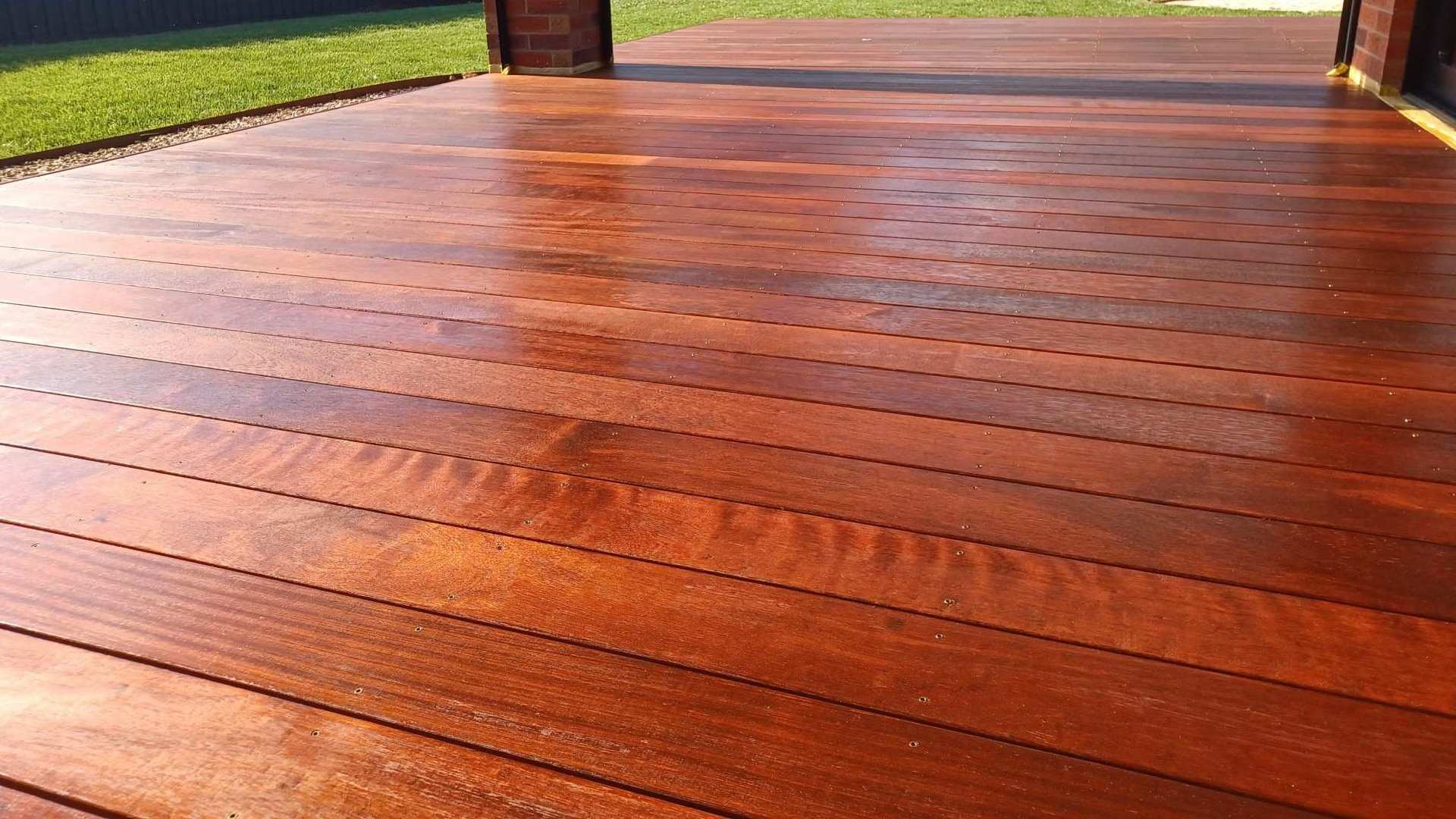 ^ Merbau decking
Hardness and durability
Merbau decking has a Janka hardness rating of approximately 8.5 and is classified as Durability Class 1 above ground, with an expected service life of more than 40 years above ground under suitable conditions. It is naturally resistant to termites and offers strong resistance to decay, making it a durable option for outdoor applications.
Tannin bleed
One consideration is tannin bleed. Rain and moisture can draw natural tannins from new boards, leaving reddish-brown stains on concrete, paving, tiles and render. To reduce leaching, pre-wash the timber with a suitable decking cleaner, use kiln-dried boards, maintain the protective coating and seal cut ends.
Bushfire suitability
Merbau has a Bushfire Attack Level of 29 (BAL-29 rating) for decking applications.
Which hardwood decking should you choose?
Explore Bowens timber decking range to find the right hardwood for your next project. With the biggest and best quality variety of decking on the market, you’ll find exactly what you need for your next decking project.
Not sure what decking is right for your job? Check out our buyer’s guide to timber decking or visit one of our stores across Melbourne and Victoria.
Timber Decking Frequently Asked Questions
Is karri harder than merbau?
Karri is a dense hardwood, but a reliable, directly comparable Janka rating for both species should be confirmed before stating which is harder. Hardness measures resistance to indentation, not overall durability.
Does karri decking need to be oiled?
Oiling helps maintain the decking’s colour and appearance. Choose a suitable decking finish and follow the product’s application and maintenance instructions.
How do you maintain karri decking?
Remove dirt and debris regularly, inspect boards and fixings, and apply a suitable decking finish as needed. Ensure the subfloor remains well ventilated.
How do you maintain merbau decking?
Clean the deck regularly, manage tannin leaching before sealing, maintain the protective coating and inspect boards for wear or movement.
How often should you oil hardwood decking?
Reapplication depends on exposure to sun and rain, foot traffic, the coating used and the condition of the timber. Follow the finish manufacturer’s recommendations.
Why does merbau decking bleed?
Merbau contains natural water-soluble tannins. When rain or irrigation wets the timber, tannins can leach out and stain nearby concrete, paving and render.
Is karri or merbau suitable for bushfire-prone areas?
They are suitable BAL applications. They both can achieve a Bushfire Attack Level of 29.
How long does hardwood decking last?
Karri is classified for approximately 15–40 years above ground, while merbau is rated for more than 40 years above ground under suitable conditions. Installation quality, drainage, exposure and maintenance influence actual service life.
Bowens Benefits
A loyalty account that gets you 5% off every shop
Ready to sign up?
Already have an account?
Login hereTrade Account
Custom pricing, 30-day trade credit + more
Ready to apply?
Already have an account?
Login here