

Advantages & Considerations of Solid Timber Flooring
Solid timber flooring has long been the go-to flooring choice for residential and commercial projects due to its natural beauty and durable performance. But is it the right fit for every project? Below, we break down the advantages of solid timber flooring, and what you need to consider so you can make the best call for your next job.
What is Solid Timber Flooring?
Solid timber flooring is produced from natural timber, typically ranging between 18-20mm in thickness. Milled from hardwood logs, its durability, natural warmth, and ability to be sanded back multiple times makes it a popular option.
Common hardwood flooring options include:
- Blackbutt Flooring – Popular for its light, contemporary tones
- Spotted Gum Flooring – Known for its strength and striking grain patterns
- Jarrah Flooring – A rich, reddish timber ideal for traditional spaces
- Tasmanian Oak Flooring – Versatile and widely available, with a lighter finish
- American Oak Flooring – naturally hard and heavy timber with light to dark brown colouring
- Brush Box Flooring – dense hardwood timber with light to greyish pink through to a reddish brown.
The Advantages of Solid Timber Flooring
Durability and Longevity
Solid timber floors are built to last. With proper care, they can perform for decades, even a lifetime. Hardwoods like Spotted Gum and Jarrah are highly resilient to wear, making them ideal for high-traffic areas like living spaces or commercial interiors. Whereas Tasmanian Oak and American Oak are sort after for their colour and warmth, making them perfect for modern and contemporary homes.
Unlike engineered timber flooring or laminate floors, solid timber can be sanded and refinished 3-4 times over its lifespan to remove scratches and dents. This not only restores its original appearance but further extends its life.
Visual Appeal
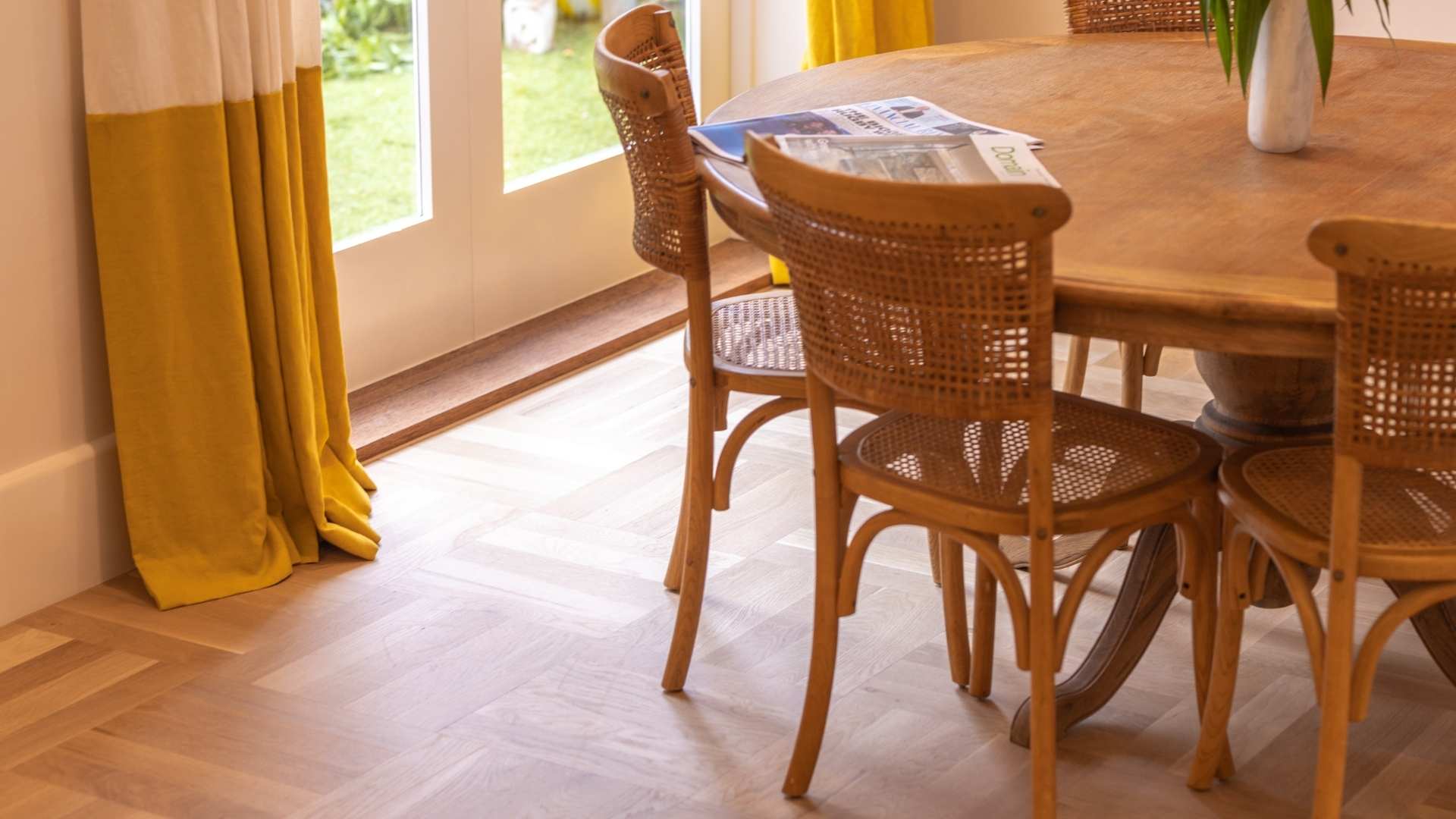
Solid timber flooring offers a timeless, natural beauty to a property. Each board features unique grain patterns, adding warmth and character, whether it’s a modern renovation or a heritage build.
Timber flooring is categorised through a visual grading system. This helps designers, architects and homeowners choose the right appearance for their projects.
There are commonly three visual grades used in Australia. These are:
- Select Grade (Premium)
Select grade timber offers a refined and uniform appearance, with minimal natural imperfections such as knots or colour variations. This makes it an excellent choice for sleek, modern designs where consistency is key.
- Standard Grade (Feature)
Standard grade timber displays more natural characteristics, including some knots and features, giving it a slightly more varied look compared to select grade. It’s a versatile option suited for both residential and commercial applications.
- Rustic Grade (High Feature)
Rustic grade timber showcases a pronounced natural aesthetic with visible knots, cracks, and colour variation. This grade is ideal for creating an authentic feel, often used in traditional or country-style designs.
Adds Value to the Property
Timber flooring is seen as a premium feature in homes, boosting resale value and enhancing buyer appeal. It’s an upgrade that delivers both immediate and long-term returns.
Low Maintenance Option
Solid timber flooring is a relatively low maintenance option with spills and dust easily cleaned from the surface. Plus, if a board is damaged, unlike timber flooring using a direct stick method, solid timber boards can be easily removed and replaced.
Solid Timber Flooring Considerations
Cost
Solid timber flooring comes at a higher upfront price than alternatives like engineered timber flooring. Installation and on-site finishing also add to project costs, making it a premium option.
Susceptibility to Moisture and Humidity
Timber’s natural properties make it prone to warping, cupping, or swelling in damp or humid environments. Having said that, like most products, preparation, installation and specifications play a major role in these factors.
- Adequate ventilation: Inadequate ventilation in subfloor cavities can cause mould and fungal growth. To prevent this, subfloors must have both an entry point for airflow and an exit point on the opposite side of the structure. Flooring regulations also require cross-ventilation, ensuring consistent airflow beneath the house.
- Proper pre-installation care: Proper site storage and handling are important to maintaining the integrity of timber flooring. Boards should be protected from weather, excessive heat, and moisture during storage and installation to prevent damage.
- Acclimatisation: Temperature fluctuations can alter the moisture content of timber, leading to changes in board dimensions. Variations in movement across a floor can occur due to differences in timber grain patterns and sapwood content. Ensuring the environment closely resembles the floor’s intended in-service conditions is crucial for stability.
Bowens solid timber flooring undergoes moisture testing before delivery to comply with Australian Standard 2796.1:1999. Manufacturers kiln dry the timber to align its moisture content with the average equilibrium levels of the destination’s nearest capital city, ensuring reliable performance.
Bowens Solid Timber Flooring Range
For a wide range of timber flooring species and sizes such as Blackbutt flooring, Tasmanian Oak, Jarrah flooring, White Baltic Pine flooring, American Oak flooring and more, explore Bowens website for flooring options. Alternatively, visit our Circa Showroom for flooring samples, advice and technical information.
Bowens Benefits
A loyalty account that gets you 5% off every shop
Ready to sign up?
Already have an account?
Login hereTrade Account
Custom pricing, 30-day trade credit + more
Ready to apply?
Already have an account?
Login here