

Common Mistakes When Installing Fibre Cement Cladding
How to Avoid Installation Issues
Fibre cement is a highly durable, low-maintenance cladding. However, even the strongest cladding can fail if it’s not installed correctly. Many common issues, including cracking, water ingress, and swelling, are usually the result of installation mistakes rather than the product itself.
Here are some of the most common fibre cement cladding installation mistakes and how to avoid them.
Incorrect Sheet Spacing and Joint Gaps
Another common mistake is failing to leave the correct spacing between sheets and joints. Fibre cement products naturally expand and contract slightly with temperature and moisture changes. Without adequate gaps, sheets can crack, warp, and put stress on fixings.
Always follow the manufacturer’s recommendations for expansion gaps and joint spacing. Proper spacing allows the cladding system to move as intended while maintaining a clean, durable finish.
Not Following the Manufacturer’s Guidelines
Every cladding system has specific installation requirements, including fixing methods, spacing, flashing details, and approved accessories. Ignoring these guidelines can lead to structural issues, water penetration, voided warranties and non-compliance. Manufacturers design their systems to perform as a complete assembly, so installers should never rely on “standard practice” alone.
Incorrect Installation of Building Wrap
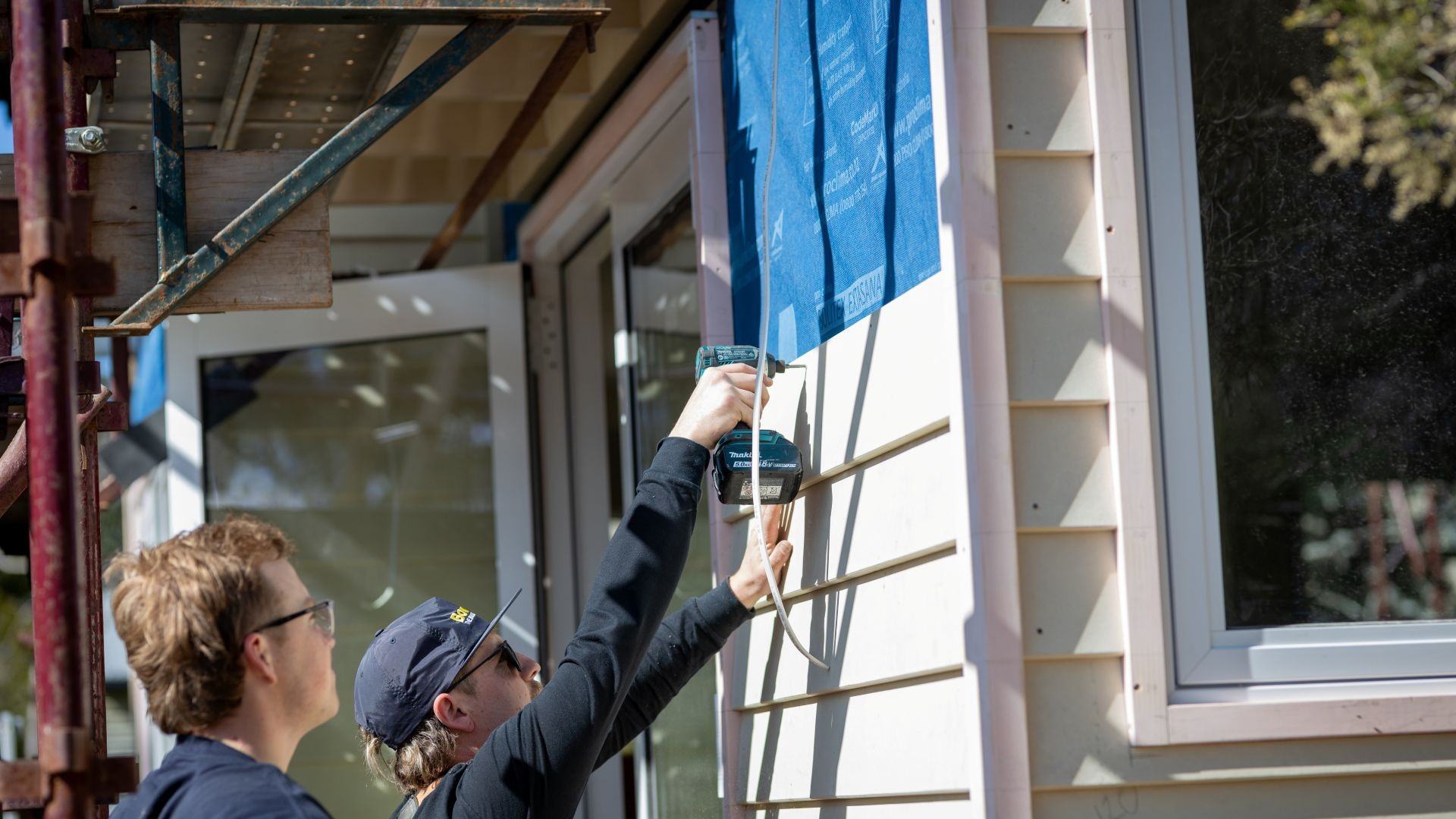
Building wrap and moisture barriers are an important part of protecting the structure behind the cladding. Incorrect installation can trap moisture, reduce ventilation, and increase the risk of mould. Before the fibre cement cladding is installed, the wall system should be wrapped and include drainage cavities and moisture management details in accordance with manufacturer specifications and building standards.
Poor Flashing Installation
All wall openings, penetrations, intersections, connections, windowsills, heads, and jambs must be flashed correctly. When flashing is incorrectly installed, it can allow water to enter behind the cladding, causing long-term structural damage that may not be visible immediately but can be detrimental to the home.
Failing to Check for Level
Ensure the walls are dry, level and structurally sound. If the substrate is not level and properly prepared, the fibre cement cladding will appear uneven and may experience performance issues over time.
Ignoring Clearance Requirements
Installing fibre cement sheets too close to the ground can create moisture and impact damage. Most manufacturers specify minimum clearances to protect the cladding as it will absorb moisture, leading to panel damage, rot and mould.
Bowens Fibre Cement Cladding
With a wide selection of fibre cement cladding online and in-store, it has never been as easy to find quality cladding for your next project. Shop online or visit one of our conveniently located stores in Melbourne and regional Australia.
Need more information about fibre cement cladding? Read our blog ‘Why Is Fibre Cement Cladding So Popular?’
Bowens Benefits
A loyalty account that gets you 5% off every shop
Ready to sign up?
Already have an account?
Login hereTrade Account
Custom pricing, 30-day trade credit + more
Ready to apply?
Already have an account?
Login here