

Building a Sustainable Home: An Interview with Al + Imo
Choosing the Right Sustainable Cladding for the Job
Melbourne furniture maker Al and designer, Imogen Roberts, form the husband-and-wife duo, Al + Imo. In 2020, the pair purchased a block in the beachside town of Torquay with the mission to build an all-electric, sustainable and energy efficient home for their growing family.
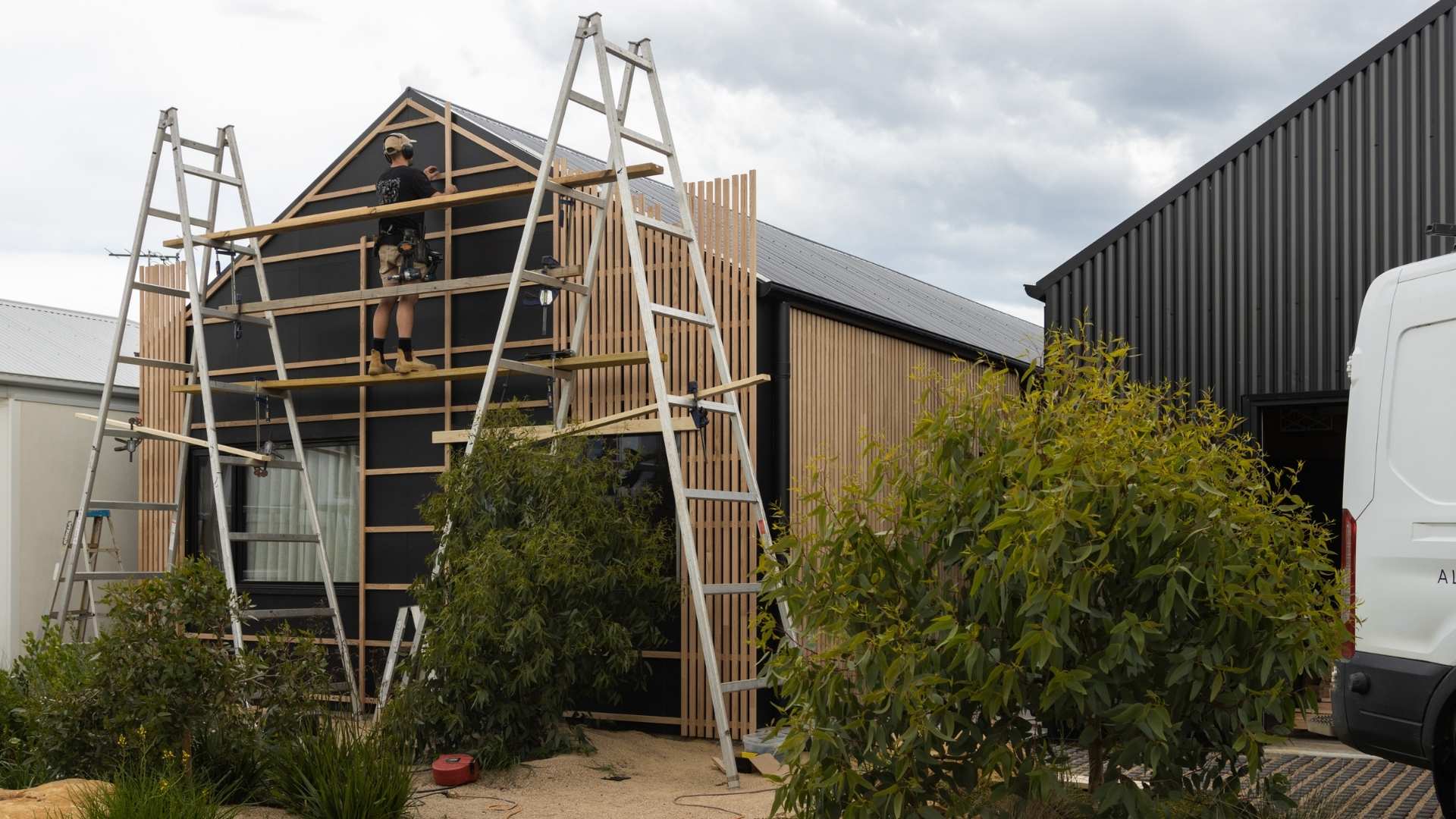
They called their home The Good Day House and have been documenting the build online over the past few years. While Al is now a furniture maker, he is a carpenter by trade and took on the challenge of completing the carpentry himself, including exterior timber cladding on the façade and back studio. This is where Bowens comes in.
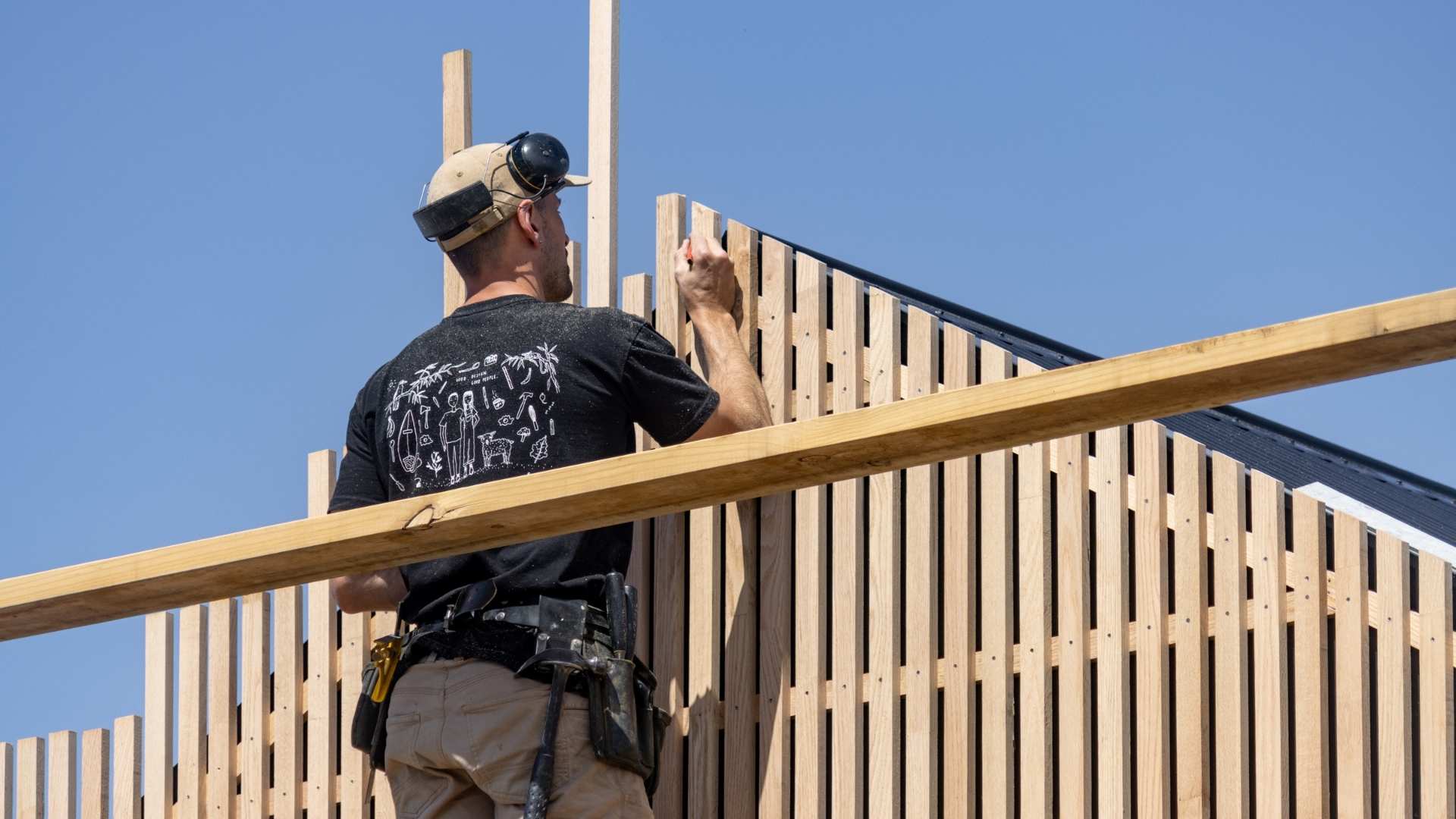
Bowens supplied the duo with 1,500 lineal metres of IronOak cladding for the façade. This cladding was installed against black sheeting, giving their home a unique and impressive street presence.
The team were originally looking for Silvertop Ash cladding however, due to Victorian logging restrictions, this species was unavailable. Bowens worked with Al and Imogen to find an alternative product and they landed on IronOak H3 Treated American Oak by Australian Sustainable Hardwoods (ASH). This sustainable and imported hardwood was the perfect fit for Al and Imogen’s project.
How did you decide on IronOak cladding as an alternative to Silvertop Ash?
Imo: We wanted light blonde timber battens on the front of the house. So Bowens provided three options to choose from as alternatives to the Silvertop Ash. The IronOak, IronAsh and Spotted Gum, and we ended up going with the IronOak by Australian Sustainable Hardwoods.
Al: The lengths are finger jointed, so from a sustainability perspective, they’re not wasting any of the timber.
Imo: The cladding design is a mix of Japanese and Scandinavian styles. I think most people would paint the horizontal battens behind the black, but we wanted to do something a little bit different and have them both visible.
Al: It gives a 3D look to the whole house, as opposed to just the vertical battens. We used the 19 by 42 IronOak battens instead of 42 x 42, so it’s only coming out 38mm. It’s a good result because we would have had to redesign the reveals of the windows if we couldn’t get the thin profile battens.
The cladding is one of many sustainable elements you have opted for. Why do you think more and more people see value in a sustainable or high-performance home?
Imo: Cost for one thing. Cost of electricity, cost of gas. I think there’s a financial pressure and also a societal pressure where we’re becoming more conscious of better options. Al and I were talking about this yesterday. I feel like Victoria in particular has this progressive mindset where we are wanting to do better, we are wanting to be better, we’re wanting to build better.
Consumers are wanting it. They want better homes, they want more comfortable homes. They don’t want to have to pump heating and cooling all the time because now we know there are other options out there.
Al: There are so many ways you can think long term about saving money and saving the environment. At the end of the day, after a few years, it’s making you money and it’s saving you money. The water tank, the solar, the insulation in the walls – it may seem like the upfront cost is more than if you just slapped up a house in the cheapest way possible, but the high performing homes are costing you less if you lived there for long enough.
How did you find the right builder for your project?
Imo: We went to a few volume builders, and we couldn’t get the energy rating across the line. When the designs were dropped on the block, there was so much wasted space, so it just didn’t feel like we were going to create something that’s suitable for the space itself.
I think when you are building a house from scratch, you have a bit of a responsibility to do the best you possibly can with the space that you’ve been given. So we moved on to looking for a custom builder. When Sheriff Constructions got my message, they wrote back and said let’s catch up for a meeting and create something epic. They were really positive from our first interaction.
Besides designing the home to work with the block, what were some other elements you implemented to help build a sustainable and energy efficient home?
Imo: We installed a big water tank. Whenever it rains, you’re so happy because you know you’re going to be able to use that water.
Al: Insulation. I’ve built a fair few houses and I haven’t seen such thick insulation go in the ceiling. And that’s a big reason why it stays so nice in the house.
Imo: Yes, and double glazing is another one. That was expensive but we didn’t have a choice, but we were very glad that it was part of the guidelines. It’s another really good way of keeping the heat in and the cool out and vice versa in the summer.
Al: I think that’s the main thing about having a well-built, sealed, insulated house, is that it just makes such a difference. You’re comfortable day-to-day.
You mentioned you worked with your builder to bring your dream home to life. However, the house is predominately timber internally. Did you design the home with timber throughout so you could utilise your carpentry skills or is it a love for the material?
Al: We both love timber as a material. Personally, in our furniture business, I barely use anything other than timber, apart from hardware. That’s just what I like to work with. With building a house, we thought, how can we utilise my skills as a carpenter as much as possible to save on budget?
It must feel good to say to your kids, we built this.
Imo: Our three-year old goes, my daddy made that deck. My daddy built that fence.
Al: The other day she said to her daycare friends, “Come for a play date at my house and you can see my daddy build things.”
What do you believe is the biggest challenge when it comes to building your dream home?
Al: You will always go over your budget. If it’s your dream home, you’re going to spend more money than you think at the beginning. That’s going to happen with everyone’s dream house because you’re like, this is my one opportunity. I don’t want to get it wrong.
Imo: I would also add, have a list of non-negotiables and those non negotiables be things that will make your life better. Think about how you imagine yourself living in that space.
A non-negotiable for me was that I wanted an internal garden in the middle of the house. I wanted to it to feel like the outside came inside. Another non-negotiable for me was, I didn’t want any wasted space. I don’t think bigger is better at all.
I read this interesting article that said, families that live in massive homes are really disconnected. I wanted to create a smaller space so that we are always around each other and we can really connect with our family.
Bowens Benefits
A loyalty account that gets you 5% off every shop
Ready to sign up?
Already have an account?
Login hereTrade Account
Custom pricing, 30-day trade credit + more
Ready to apply?
Already have an account?
Login here