

Carpenter Turned Educator
An Interview with Adam Laxton
Adam’s journey began as a carpenter, but when it was clear he had a great way of teaching apprentices and good trade knowledge, he was encouraged to transition into teaching. With a young family to look after, the change was the perfect fit.
Adam is now the Manager of Building & Construction at Chisholm TAFE and spends his time teaching students how to become a trade.
How did you make the transition from the tools to the desk?
The minimum requirement to become a TAFE teacher was my Trade qualifications and a Certificate IV in Training and Assessment (TAE40122). At first, I didn’t know what to expect when I started studying for Certificate IV in Training and Assessment as I hadn’t done any formal education since leaving school 20 years earlier. With great support from my family, Chisholm and the existing teaching staff, I completed my Certificate IV in Training and Assessment. I decided to then undertake my Diploma of VET Practices so I could better understand the needs of future students. Both courses took a lot of effort and commitment, but the benefits certainly paid off.
“The minimum requirement to become a TAFE teacher was my Trade qualifications and a Certificate IV in Training and Assessment (TAE40122).”
What are the aspects of TAFE that students struggle with the most?
Within the current requirements of the apprenticeship training package, there is a large element of required knowledge. Some of this knowledge can only be gained via theory-based learning which some apprentices don’t expect. They go into the trade because they enjoy the hands-on physical work, and therefore sometimes the theory side of the apprenticeship can be a challenge.
“They go into the trade because they enjoy the hands-on physical work, and therefore sometimes the theory side of the apprenticeship can be a challenge.”
What is the biggest highlight in your teaching career so far?
Over my career at Chisholm, I’ve been lucky enough to have had many highlights and opportunities. These include Apprentice training package review and input, government-funded course resource development and community-based projects. The highlight for me was having the opportunity to go to Russia for the 2019 WorldSkills International Competition. WorldSkills is a vocational skills competition that supports young people across the world via competition-based training, assessment and benchmarking. Chisholm actively participates in encouraging and training students to compete at WorldSkills competitions locally, nationally and internationally. It’s a great recognition of student excellence and an internationally recognised competition so it’s really rewarding to be a part of.
“The highlight for me was having the opportunity to go to Russia for the 2019 WorldSkills International Competition.”
What aspect of Trade School do you believe best prepares students for life as a tradesperson?
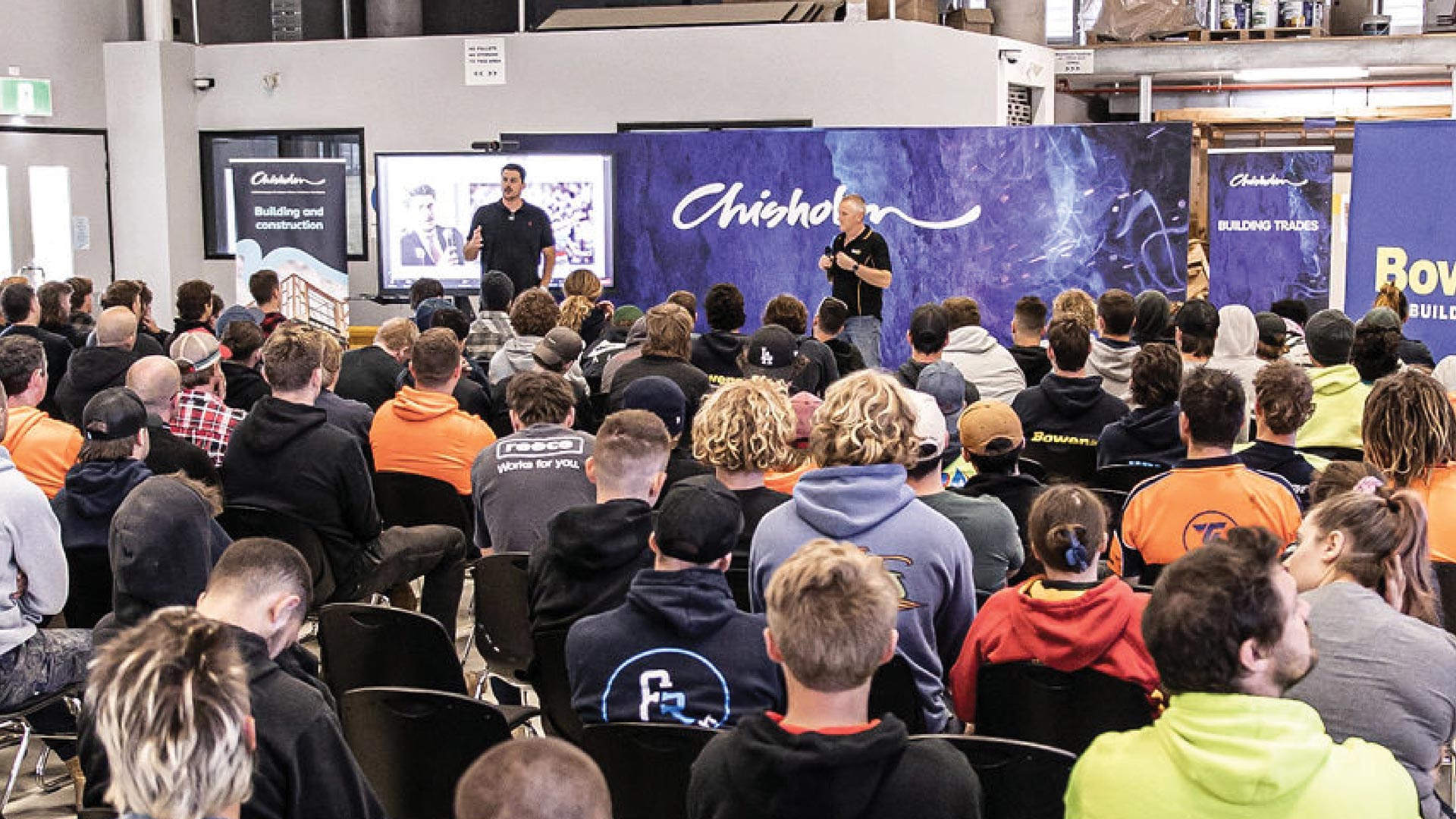
Chisholm TAFE
Trade School can have a big impact on an apprentice in preparing them for industry. Great support networks such as good industry-connected TAFE teachers to guide them through their training programs are an essential part. Networking with other apprentices/ students at Trade School is a great way to get a different perspective on trade life and make connections for the future. A good employer will also provide all the on-the-job training needed for an apprentice. Yet the most important aspect of Trade School is that it highlights the need for apprentices to have their own commitment and drive to achieve their personal goals and future pathways.
“Networking with other apprentices/ students at Trade School is a great way to get a different perspective on trade life and make connections for the future.”
If there was anything you could add to the curriculum to better prepare students for work, what would it be?
Our training packages are developed in consultation with industry, so they contain the most up-to-date and relevant units to prepare students for work. However, I do see an opportunity to include apprenticeship training units on how to manage and run a small business. For those apprentices who finish their apprenticeship and become subcontractors, there is a need for them to know the basics of how to manage their finances such as Tax payments or GST.
“For those apprentices who finish their apprenticeship and become subcontractors, there is a need for them to know the basics of how to manage their finances such as Tax payments or GST.”
For high school students wanting to become a trade, what advice would you give them?
That’s easy. If a high school student knows what trade they’re interested in, get onto a job site and try the trade. Do as much work experience as possible to get exposure to the industry as sometimes what you think a trade may be, could be very different in real life. If they’re unsure of which trade career they’re most interested in, see what courses are available at TAFE and try as many as possible to find their passion. Don’t be afraid to ask questions and be prepared to learn. Last and most importantly, they need to make sure they enjoy what they do. Being a tradesperson isn’t just a career, it’s a lifestyle.
“Do as much work experience as possible to get exposure to the industry as sometimes what you think a trade may be, could be very different in real life.”
Bowens Benefits
A loyalty account that gets you 5% off every shop
Ready to sign up?
Already have an account?
Login hereTrade Account
Custom pricing, 30-day trade credit + more
Ready to apply?
Already have an account?
Login here