

Tannin Leaching: Prevention and Removal Techniques
Understanding Tannin Leaching
As professional builders, it’s essential to understand tannin leaching and its impact on construction projects. In this blog post, we will break down the topic into easy-to-follow steps, providing preventive measures and effective techniques for removing tannin stains. By implementing these strategies, you can maintain the quality and appearance of your work. Let’s dive in!
How to Prevent Tannin Leaching
TIP 1: Choose Low Tannin Leaching Timbers
- Opt for timbers like Spotted Gum or Cypress Pine, which have lower tannin content
- Avoid high tannin leaching species such as Merbau, Blackbutt, and Red ironbark
- By selecting timbers wisely, you can reduce the likelihood of staining issues.
TIP 2: Seal Cut Ends During Installation
- Seal the cut ends of timber with an appropriate sealer
- Focus on the exposed ends as they are most prone to tannin leaching
- Properly sealed cut ends act as a barrier, preventing tannins from leaching out.
Removing Tannin Stains
STEP 1: Gather the Necessary Tools
- Intergrain Ultra Prep Tannin Oil Remover or Cutek Restore
- Water
- Gloves and safety glasses for personal protection
STEP 2: Wet the Affected Area
- Thoroughly wet the surface with tannin stains before applying any stain remover
- Use caution around nearby plants, vegetation, or metal claddings. Consider covering them to prevent potential damage from the solution.
STEP 3: Apply Tannin Oil Remover
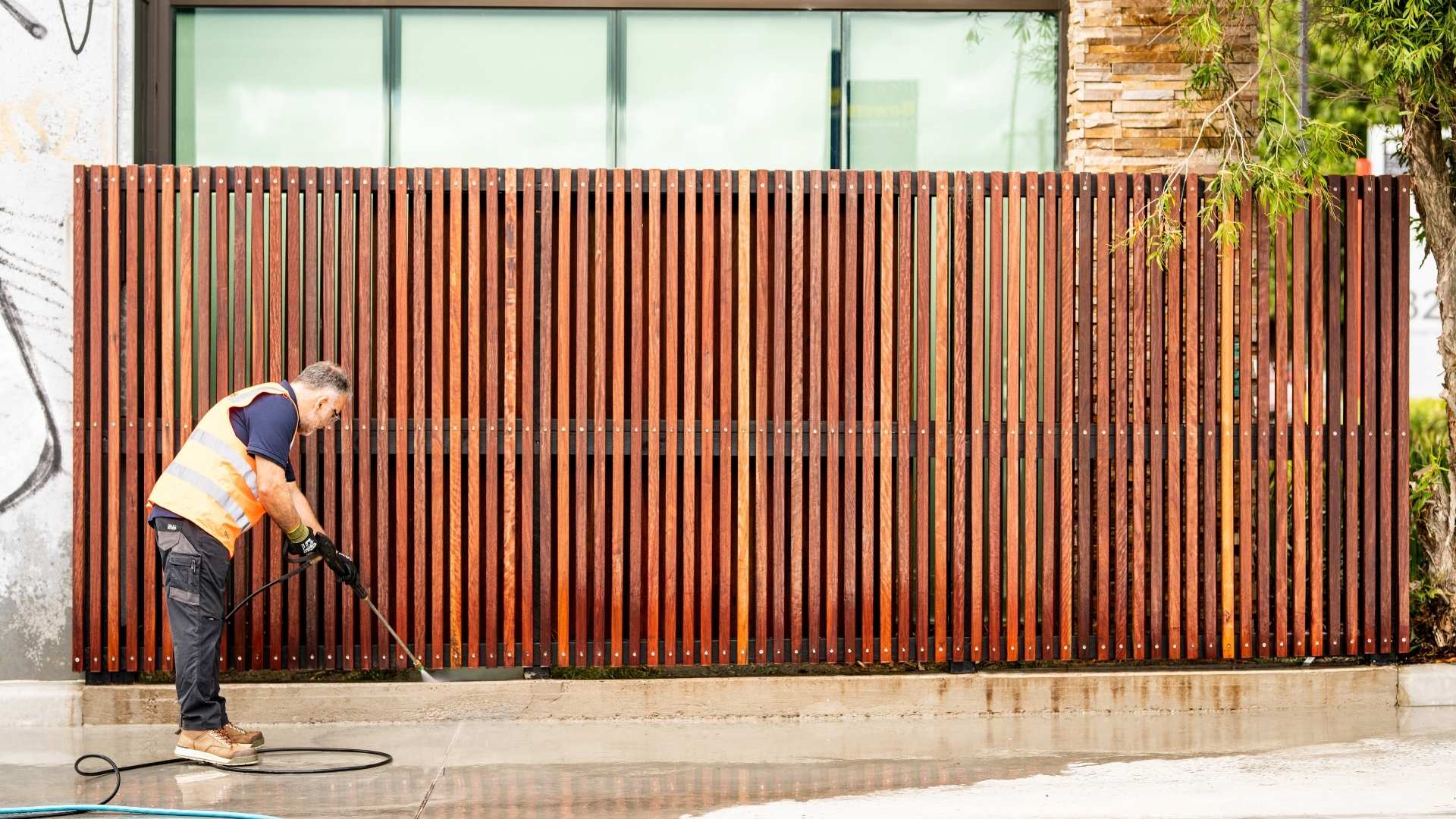
- Mix the Intergrain Ultra Prep Tannin Oil Remover with water at a ratio of 1:4 (one part remover to four parts water)
- Wear gloves and safety glasses for protection
- Apply the solution to the tannin-stained area.
STEP 4: Allow the Solution to Work
- Let the tannin solution sit for 10 to 15 minutes, allowing it to penetrate and break down the stains
- This dwell time helps to ensure effective stain removal. In some cases, longer periods may be required. Please refer to the product guidelines.
STEP 5: Evaluate and Repeat if Necessary
- Check the treated area to see if the stains have been successfully removed
- For stubborn stains, consider using a stronger mixture of the tannin oil remover or repeating the process.
Additional Tannin Stain Removers
Other products can be effective alternatives. Consider using Cutek Restore, Cabot’s® Deck Clean, or Diggers Oxalic Acid based on the severity of the stains and project requirements.
Key Takeaways
By following these simple steps and implementing preventive measures, you can prevent tannin leaching issues and effectively remove tannin stains when they occur. Remember to choose low-tannin leaching timbers, seal cut ends, and use appropriate stain removal products. By taking these precautions, you can ensure the longevity and visual appeal of your construction projects. Stay informed, take action, and achieve outstanding results in your building endeavours.
“Remember to choose low-tannin leaching timbers, seal cut ends, and use appropriate stain removal products.”
Bowens Benefits
A loyalty account that gets you 5% off every shop
Ready to sign up?
Already have an account?
Login hereTrade Account
Custom pricing, 30-day trade credit + more
Ready to apply?
Already have an account?
Login here