

How to Prevent Timber Flooring Gaps
Timber Flooring Installation
Timber flooring is a stunning and yet durable choice for residential and commercial builds—but when gaps start to appear between boards, it can be a frustrating issue for both clients and installers. If you’ve recently installed timber flooring and noticed some gapping, you’re not alone. It’s a common problem, especially during seasonal changes or when proper site preparation has been overlooked.
What Causes Gaps in Timber Flooring?
The number one cause of gapping in timber floors is moisture content variation. Timber is a natural product that expands and contracts in response to changes in humidity and temperature. When boards are laid in an environment that’s too dry, they can shrink, leaving noticeable gaps.
A frequent mistake is installing timber flooring before the home reaches lock-up stage. This includes completed external doors, windows, and plasterwork. An open home—especially during a hot, dry summer—can cause floorboards to lose moisture rapidly, leading to shrinkage and movement.
Key Factors to Consider Before Installation
Ensure proper site assessment and preparation. Here’s what every installer should be checking before laying down boards:
- Lock-up stage completed: The site must be sealed from external weather conditions
- Subfloor ventilation: Ensure there’s adequate airflow to avoid moisture buildup
- Dry and level substrate: Flooring should only be laid on a properly prepared base
- Moisture checks: Use a moisture meter to confirm the floor and substrate are within acceptable levels
- Completion of wet trades: Plastering and other wet works must be finished beforehand.
Ignoring these steps can lead to issues not just with gaps, but also with floor finishes. Some finishes can seep into small gaps and cause edge bonding, where adjacent boards stick together. This can create even more pronounced gaps elsewhere as the timber continues to move with seasonal conditions.
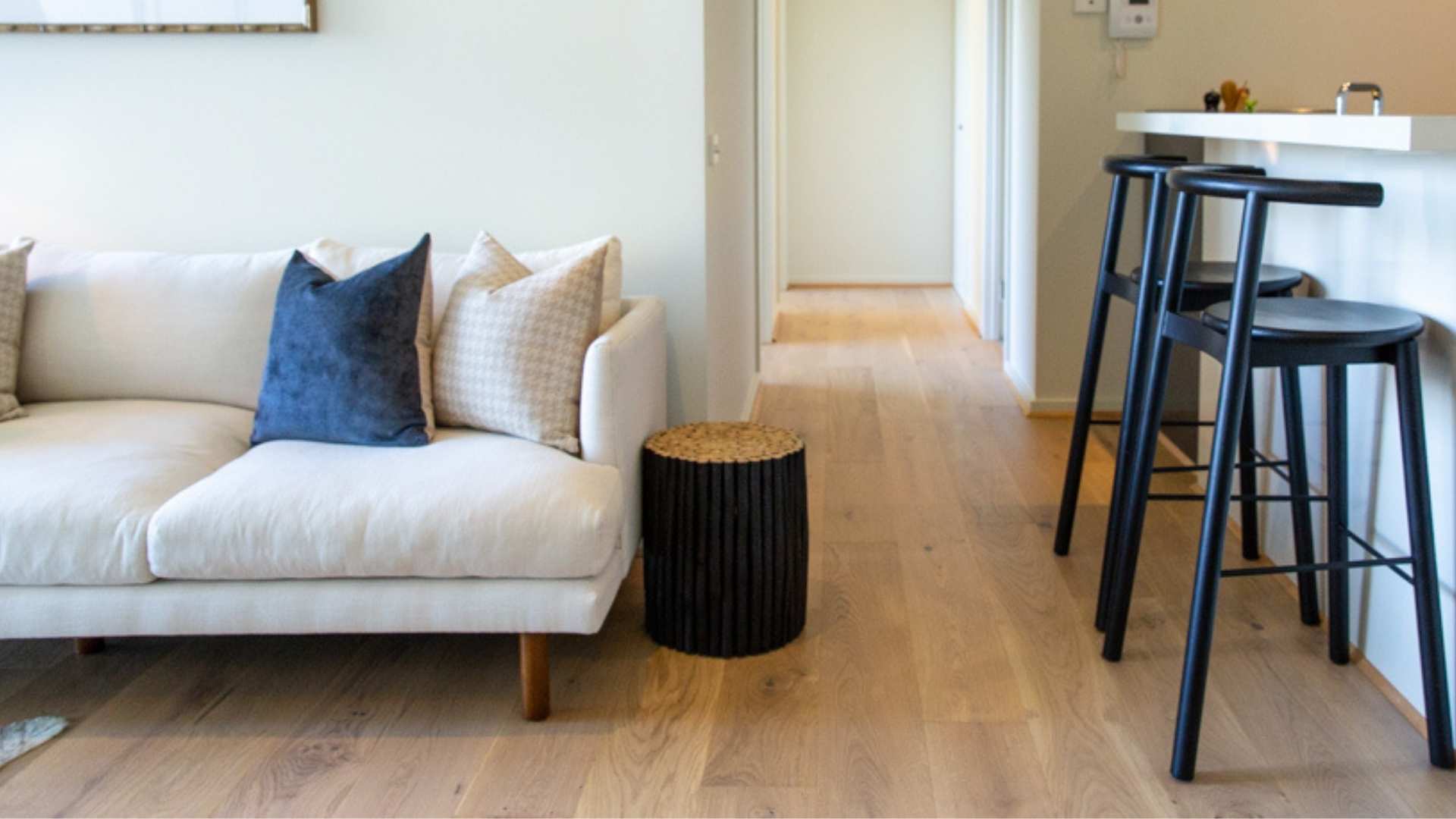
Timber Moisture Standards Matter
At Bowens, our solid timber flooring is kiln-dried and moisture tested before delivery. It meets the Australian Standard 2796.1:1999, with a target moisture content of 10–12% for Melbourne’s conditions. This helps reduce the need for acclimatisation, as long as the installation site is within similar environmental parameters.
Installing solid timber flooring isn’t just about laying boards—it’s about understanding the timber flooring and the site environment. For a gap-free finish, take the time to assess the conditions properly. Follow Bowens Flooring Installation Guidelines to make sure the prep work is done right and give your clients a timber floor that lasts.
Browse our range of flooring online or arrange an appointment at Circa Showroom, where you can see and touch our largest variety of timber flooring.
Bowens Benefits
A loyalty account that gets you 5% off every shop
Ready to sign up?
Already have an account?
Login hereTrade Account
Custom pricing, 30-day trade credit + more
Ready to apply?
Already have an account?
Login here