

Timber & MDF: Which is Best for Your Architraves & Skirtings?
Choosing the Best Architrave & Skirtings
When finishing a home or renovation project, architraves and skirtings play an important role in both functionality and aesthetics. These essential elements provide a seamless transition between walls, floors, windows and doors, enhancing the overall look while protecting walls from wear and tear. Choosing the right material—whether timber or Medium Density Fibreboard (MDF) – is key to ensuring durability and design continuity. Here’s what needs to consider when selecting architraves and skirting.
Timber Architraves & Skirtings
Timber is a natural material popular for its durability and timeless appeal. Popular species used for architraves and skirtings include pine, meranti and mixed hardwood, each offering a distinct grain and colouring, perfect for staining and oiling. Timber is ideal for those looking for a traditional finish, match existing features with the home or for use in high-traffic areas or commercial spaces where general wear and tear can occur.
Pros of Timber
- The unique grain patterns and textures of timber add character and warmth to interiors
- With proper care, timber architraves and skirting boards can last for decades
- Timber can be stained, varnished, or painted to match any design preference.
Cons of Timber
- Timber can expand or contract with humidity changes, making it less suitable for wet areas unless properly treated
- Compared to MDF, solid timber can be a more expensive option
- To preserve its appearance in high traffic areas, timber may require sealing or staining.
MDF Architraves & Skirtings
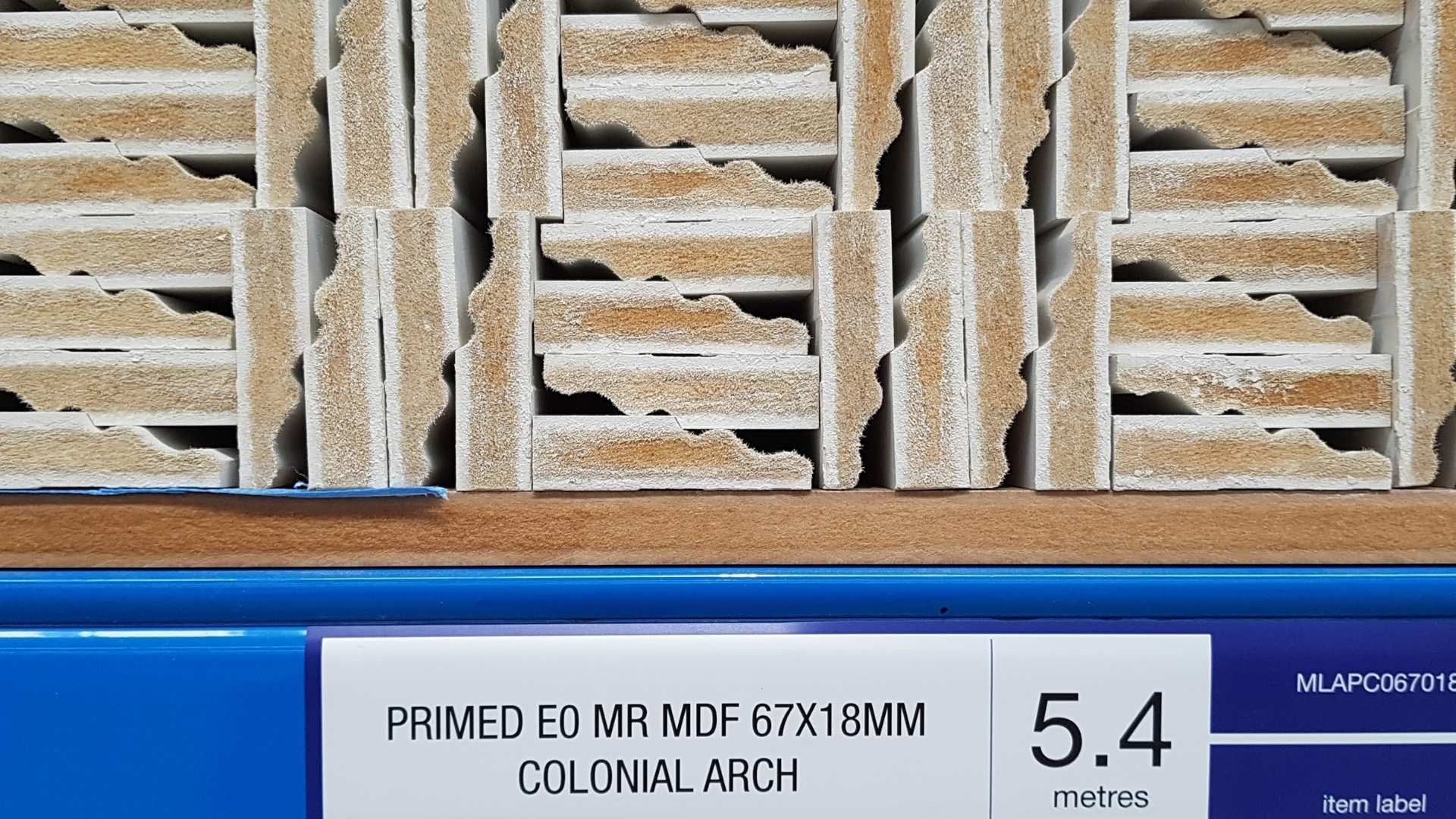
MDF is an engineered wood product made from wood fibres, resins, and waxes, resulting in a smooth and uniform material. It is widely used due to its affordability and ease of installation. MDF skirtings and architraves are ideal for contemporary interiors and cost-effective projects.
Pros of MDF
- Unlike natural timber, MDF has no knots or grain variations, making it ideal for painted applications
- MDF remains stable over time and does not crack or expand
- MDF is lightweight and usually primed, saving time onsite
- More affordable than solid timber, MDF provides a budget-friendly option for builders and homeowners.
Cons of MDF
- Standard MDF can swell or deteriorate if exposed to moisture. However, Moisture-Resistant (MR) MDF is available for use in wet areas
- Unlike timber, MDF lacks natural grain and requires painting
- MDF is not as strong as timber, so it can be more easily damaged in high-traffic areas.
Choosing the Right Material
When selecting between timber and MDF for architraves and skirtings, consider the project’s requirements:
- For premium homes, heritage renovations, or high-end finishes, timber offers elegance and durability.
- For budget-conscious projects, modern interiors, or quick installations, MDF provides a smooth, practical, and pre-finished solution.
- For moisture-prone areas, opt for MR MDF to ensure longevity.
Both materials have their advantages and trade-offs, so the best choice depends on the design, budget, and maintenance expectations. By understanding these factors, you can recommend the most suitable option for each project.
Bowens supplies a wide range of timber architraves and skirting boards and MDF architraves and skirting boards to suit a variety of designs and situations. Browse our website or drop by one of our local stores to explore our options.
Bowens Benefits
A loyalty account that gets you 5% off every shop
Ready to sign up?
Already have an account?
Login hereTrade Account
Custom pricing, 30-day trade credit + more
Ready to apply?
Already have an account?
Login here