

HRV Systems: Why They Matter
Heat Recovery Ventilation (HRV) systems on the rise
As homes become more airtight and energy efficient, ventilation is becoming an increasingly important consideration for builders. Higher-performing building envelopes can reduce natural airflow, making it more important to have an effective ventilation strategy in place.
This is one reason Heat Recovery Ventilation (HRV) systems are becoming more prevalent in high-performance homes.
More Airtight Homes Mean Less Natural Ventilation
While airtight homes can deliver benefits for the home’s overall performance, it also means stale, humid air can remain trapped inside without adequate ventilation.
“The home doesn’t breathe like it used to,” Glenn Costello, National BDM at Fantech, explained at Bowens Building and Innovation Expo 2026. Everyday activities including showering, cooking, cleaning, drying clothes and heating can create significant amounts of moisture.
‘A household can produce between 8 and 15 litres of water vapour each day through normal activities,’ Glenn added.
Why Condensation and Indoor Air Quality Matter
Without an appropriate ventilation system, that moisture can contribute to condensation, mould and indoor air-quality issues. For builders, these problems can also become a longer-term consideration, with potential for warranty issues where ventilation isn’t adequately addressed.
“If we aren’t ventilating the house correctly, that’s when it’s going to create problems,” Glenn said.
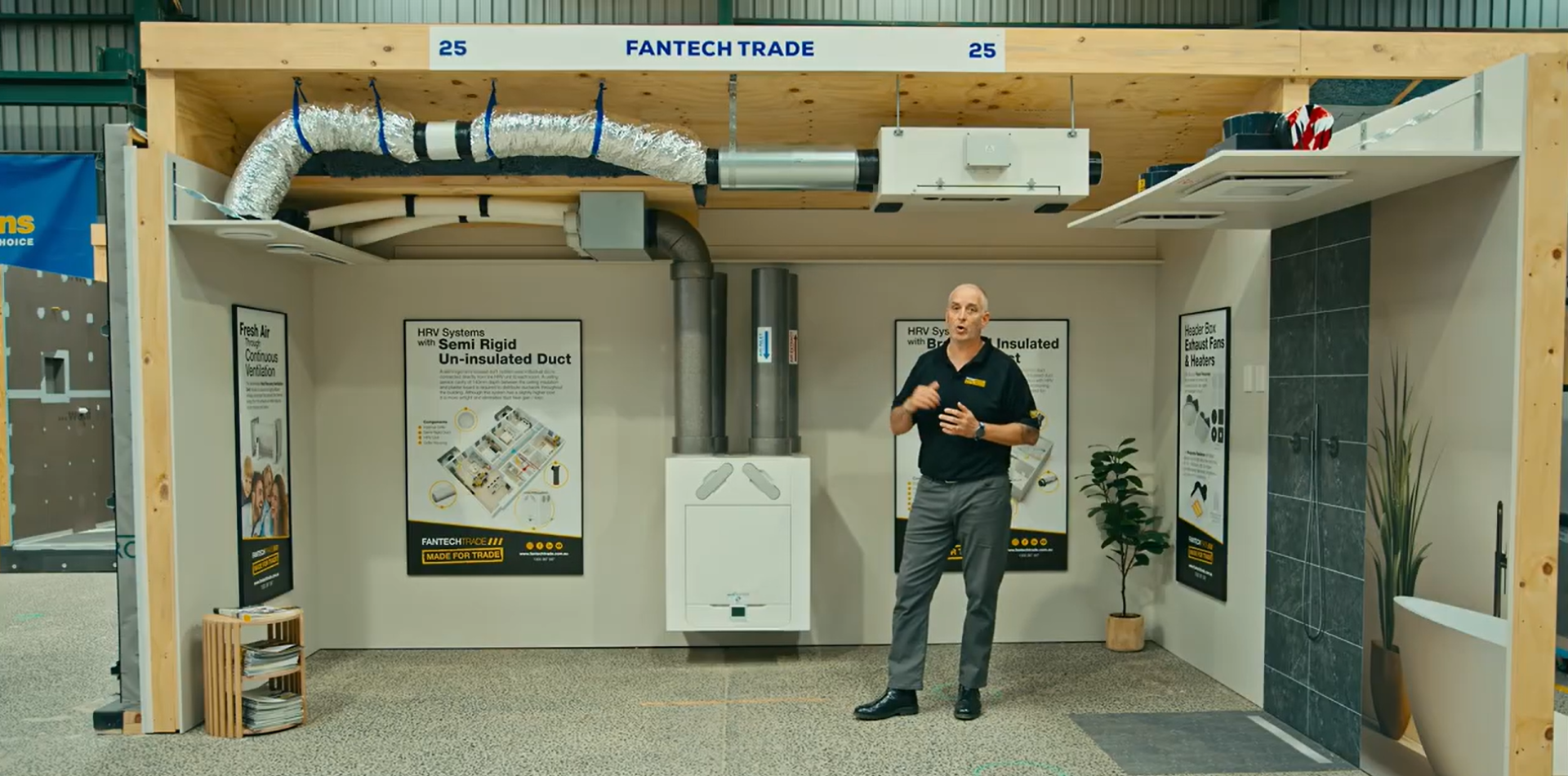
The Benefits of HRV Systems
HRV systems are designed to continuously remove stale, humid air from wet areas such as bathrooms, ensuites and laundries while supplying filtered fresh air to habitable rooms.
This continuous airflow is particularly relevant to airtight homes. Rather than relying solely on intermittent extraction, an HRV system allows the home to continually exchange indoor and outdoor air.
“It basically exhausts 24/7, while bringing filtered, fresh air into living areas and bedrooms.” explains Glenn.
Importantly, HRV is no longer being considered only for Passivhaus projects.
“We’re seeing more and more builders that are building these high-performance airtight homes and considering HRV without necessarily pursuing Passivhaus certification,” Glenn said.
Benefits of HRV systems include:
- Continuous ventilation
- Fresh filtered air
- Improved indoor air quality
- Moisture management
- Heat recovery
- Supports energy efficiency
- Best suited to airtight homes.
What Does NCC 2025 Mean for Home Ventilation?
NCC 2025 ventilation requirements also reinforce the importance of considering ventilation as part of the home’s overall design. The requirements include minimum airflow rates, ducting exhaust directly outside, run-on timers and consideration of makeup air.
“More and more builders are starting to realise that they’ve got to go down the path for whole home HRV systems,” Glenn said.
With airtightness becoming increasingly common, HRV systems offer builders another way to approach ventilation.
For more information regarding HRV systems and general NCC requirements, feel free to visit The Rethink Building Hub in Hastings. You can make a booking online today!
Bowens Benefits
A loyalty account that gets you 5% off every shop
Ready to sign up?
Already have an account?
Login hereTrade Account
Custom pricing, 30-day trade credit + more
Ready to apply?
Already have an account?
Login here