

Spotted Gum v’s Merbau Decking: What’s the Best Option for You
Spotted Gum v’s Merbau Decking
Timber decking is the perfect addition to the home and can often add to its value. However, when you are selecting a timber decking, it’s important to know which timber is right for the project. Spotted Gum decking and Merbau decking are popular hardwood choices for outdoor living spaces, and yet they both have pros and cons.
This blog will give you an understanding of whether Spotted Gum or Merbau decking are the best timber decking options for you.
What is spotted gum?
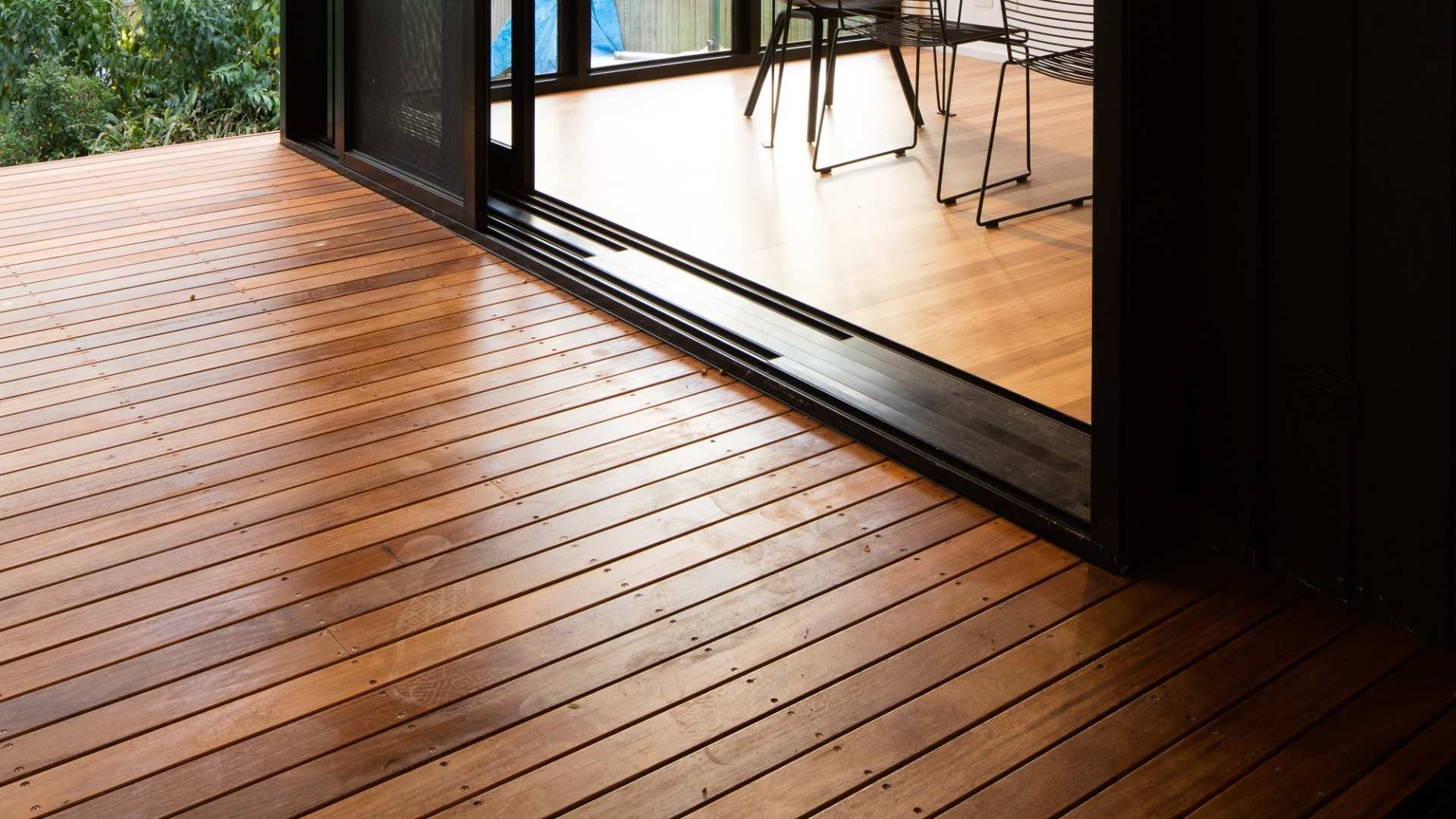
Spotted Gum is an Australian hardwood known for its durability and strength. It is grown on the East Coast of Australia and is readily available. Due to its durability, structural integrity and aesthetic appeal, Spotted Gum timber is a popular choice when it comes to decking. It is also commonly used for cladding, fencing and internal panelling, making it a versatile timber.
Spotted Gum timber ranges in colours from white and pale greys, through to dark browns and red-brown hues. Its uneven texture and wavy grain provide character to the home.
Spotted Gum Overview:
- Durability class 1 rating
- shrinkage rates of 4.5 percent radial (where the annual rings run mainly across the end section)
- 6 percent tangential (where the grain is mainly across the whole width of the end section)
- Natural fire resistance (suitable for Bushfire Attack Levels of 12.5, 19 and 29)
- Resistant to termites
- Low risk of staining or leaching
- Sourced from sustainably managed forests.
What makes Spotted Gum a great choice for decking?
Spotted Gum is one of the most commonly used timbers in Australia and offers 15-25 years in-ground and more than 40 years above ground durability. Its natural resistance to termites, weather and bushfires makes it the perfect timber decking for Australian conditions.
Spotted Gum decking also accepts stains, oils and polishes, so you can protect the timber and enhance its colour easily. This highly attractive timber is easy to work with on site and does not require pre-drilling. The fact that it tends to bleed tannins less than other timbers reducing staining, makes it a more appealing selection.
Finally, Spotted Gum timber is, in most cases, a sustainable choice. It is grown locally and harvested through sustainable practices.
What are the cons of using spotted gum decking?
Spotted Gum decking is considered middle of the range in terms of price point. This makes it a more expensive deck to install when compared to Merbau decking. Also, it is important to ensure you apply a quality oil coating to help prevent shrinkage as Spotted Gum decking is vulnerable to damage when unseasoned.
What is Merbau?
Source: Como Built
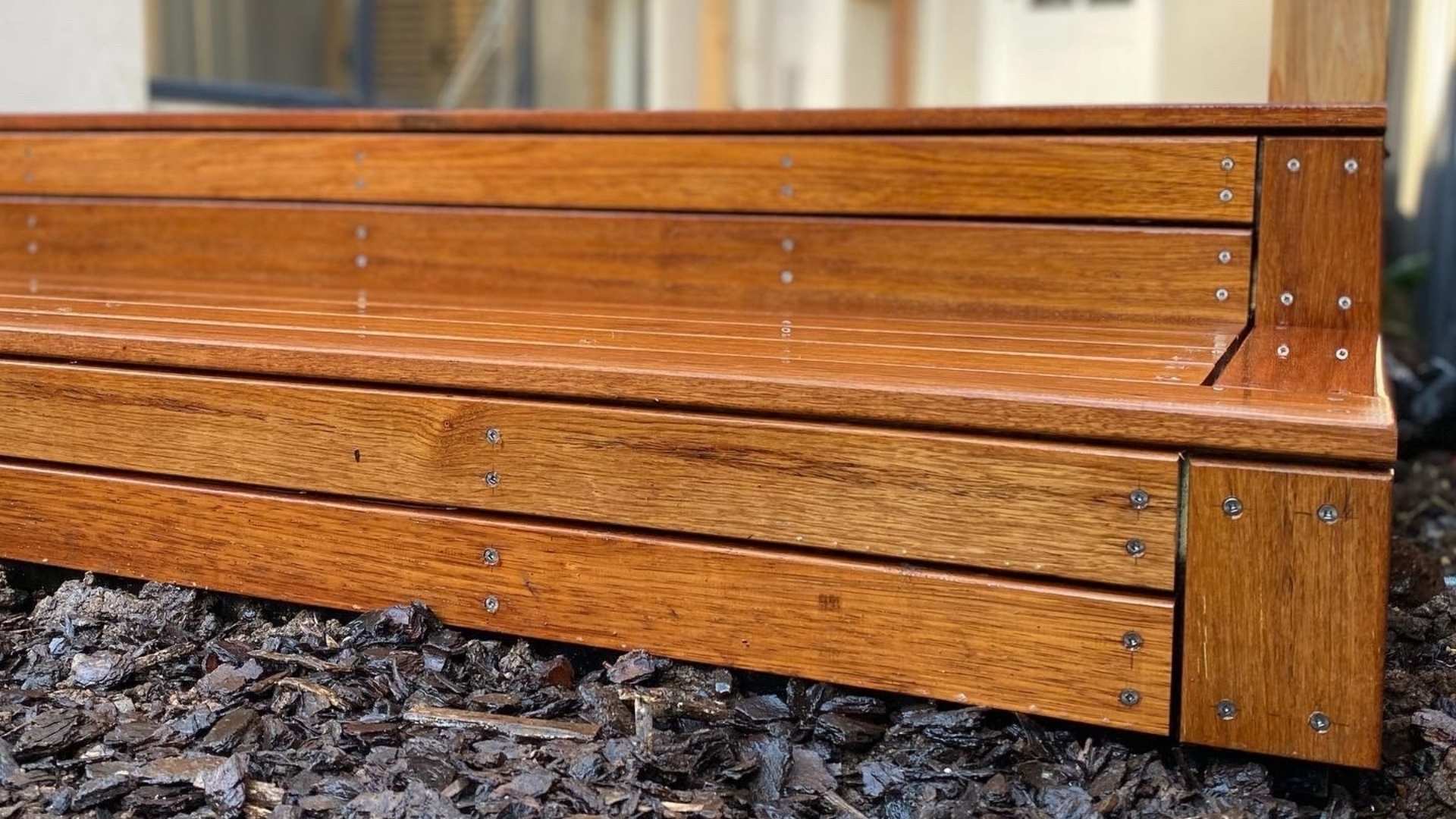
Merbau is an imported hardwood timber known for its orange golden-brown colour which darkens to a reddish-brown with age. It is the ideal decking choice due to its durability, natural ability to resist decay and ease to work with. Merbau is a versatile timber that can be used for a variety of projects, including outdoor decking, flooring and furniture.
Merbau Overview:
- Durability class 1 rating
- 5 percent radial (where the annual rings run mainly across the end section)
- 5 percent tangential (where the grain is mainly across the whole width of the end section)
- Natural resistance to termites and fungal rotting
- Suitable to use in areas susceptible to bushfires.
What makes Merbau a great choice for decking?
Merbau decking is an affordable and therefore, extremely popular decking timber. It is extremely easy to work with onsite and can be lighten or darken using decking oils and stains. Merbau decking is a highly durable timber that has a natural ability to resist decay, termites and weathering. Merbau is very stable and, as a result, has a low shrinkage and expansion rate. In addition, it is one of only a handful of timbers suitable for bushfire prone areas.
What are the cons of using Merbau decking?
Merbau is a naturally tannin-rich timber. It is important to plan your deck around this aspect to prevent obvious staining to surrounding paving and concrete due to tannin leaching. To reduce leaching, we recommend the following;
- Use tannin remover and decking cleaner such as Cabot’s® Deck Clean or Intergrain® UltraPrep™ Exterior Timber Cleaner to wash out tannins prior to applying a protective coat
- Ensure timber coatings are maintain to avoid letting moisture back in
- Select a kiln dried product
- Ensure you seal any cut ends.
For more information about tannin leaching and how to remove tannin stains, visit our blog ‘Tannin Leaching: Prevention and Removal Techniques.’
Finally, Merbau is an imported timber, meaning its impact on the environment is not locally controlled.
Spotted Gum Decking, Merbau Decking and More
If you are still unsure of the timber decking you want to use for your next project, Bowens has a wide range to choose from. Our selection includes Silvertop Ash Decking, Treated Pine Decking, Blackbutt Decking, Grey Box Decking, Ironbark Decking, Tallowwood Decking, Cumaru Decking and Jarrah Decking.
For more information on either Spotted Gum decking or Merbau decking, contact the staff at Bowens. Alternatively, drop into your local Bowens store for a chat.
What’s next? If you want to know how to correctly seal your deck, read our blog ‘How to Apply Decking Oil the Right Way.’
Bowens Benefits
A loyalty account that gets you 5% off every shop
Ready to sign up?
Already have an account?
Login hereTrade Account
Custom pricing, 30-day trade credit + more
Ready to apply?
Already have an account?
Login here