

The Treatment of Wood & The Importance of Identifying Stamps
The Technology
All timber products are sourced from trees that contain two main components: sapwood and heartwood. The sapwood, the outer layer of the tree, is non-durable but permeable due to its open cell structure, which stores nutrients. This permeability allows it to absorb preservative treatment solutions effectively.
In contrast, the heartwood, the inner core, contributes to the strength and natural durability of the timber. However, its cell structure is often clogged with extractives or natural resins, making it resistant to chemical treatments.
In softwoods like Radiata Pine, the sapwood can make up a significant portion of the tree. This allows for larger sections (up to 290×45 mm) to be effectively treated. However, in smaller regrowth hardwoods like Spotted Gum, Blackbutt, and Ironbark, the sapwood can still represent a considerable portion of the timber. Since it contains food for the tree, it is highly attractive to lyctid borers, a serious concern in construction and timber applications.
Given the increasing reliance on smaller logs, modern hardwood products often include sapwood. Reputable producers address this by treating these products to protect the sapwood, thereby increasing their overall durability.
Treatment Levels
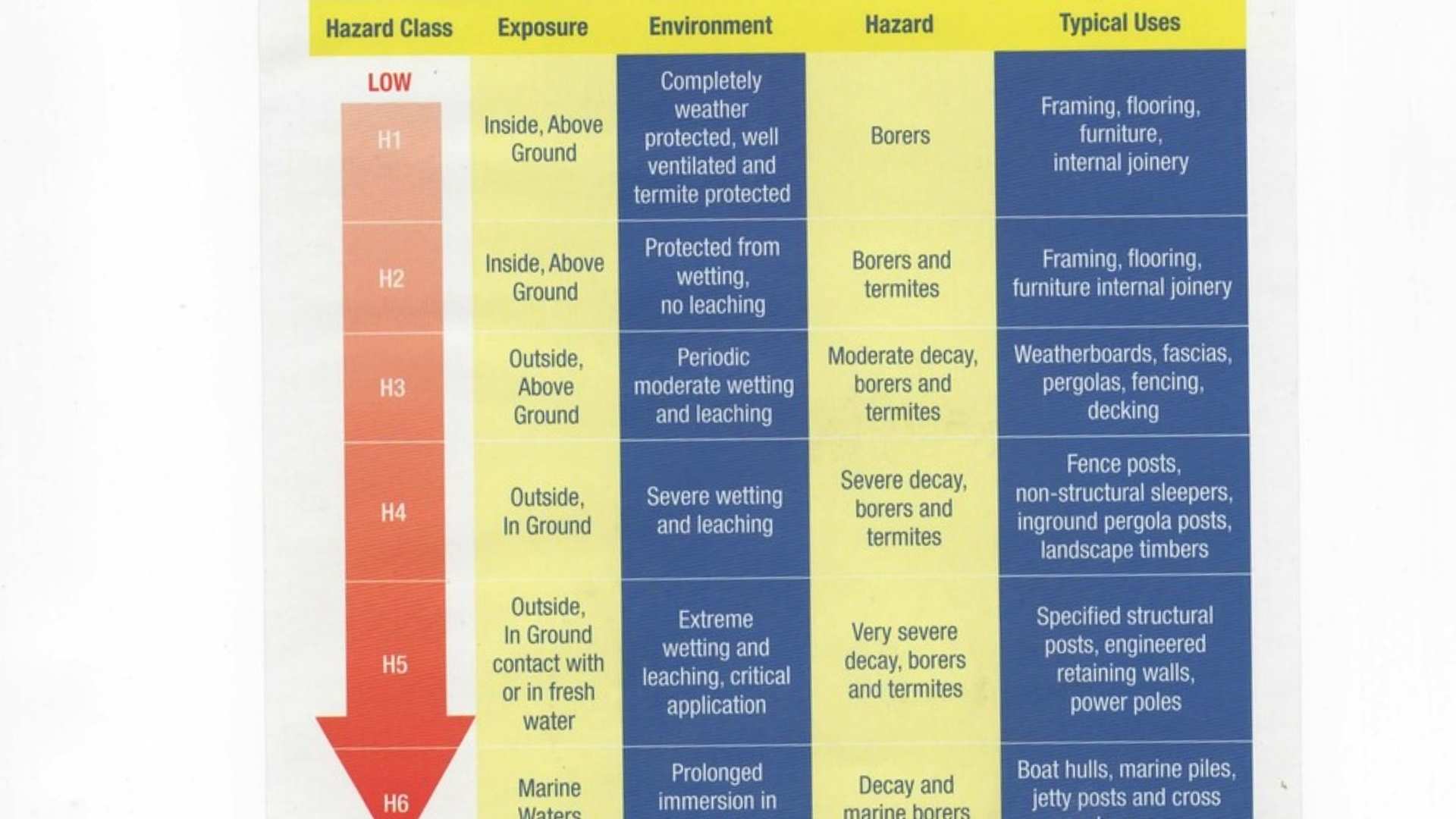
Historically, treated pine was easily identified by its distinctive green hue. Today, many treatments, particularly those used for Radiata Pine, are colourless, making it harder to distinguish between treated and untreated timber when products are stocked side by side.
For this reason, clear and permanent product identification is essential. Treated timber should be clearly stamped with:
- The manufacturer’s name
- The appropriate treatment level
For example:
- Structural products should be stamped as H3 (in above ground situations)
- Posts (such as 90×90 mm) should be stamped H4
- If a post is considered a critical structural element, it must be treated to H5, as per Australian Standards
Unfortunately, it is not uncommon to see treated products identified only by a small white tag at the end of the board. This is problematic (and potentially non-compliant), as the tag is likely to be trimmed off during installation, leaving no visible treatment information.
From my background grading Oregon timber, the industry standard required treatment stamps to be placed no closer than 400 mm from each end, ensuring they remain visible even after trimming. This is particularly important, as building inspectors and surveyors will look for that stamp during assessments.
My Recommendations
- Always ensure H3 treated products are properly stamped
- If stamping is absent, ask your supplier (including Bowens) to provide written confirmation that the timber has been treated
- Keep your invoice and documentation on file. These serve as proof of treatment in the unlikely event of future product failure.
For more information about treated timbers and their hazard levels, explore our blog “A Guide to Framing Timber Terms.”
Bowens Benefits
A loyalty account that gets you 5% off every shop
Ready to sign up?
Already have an account?
Login hereTrade Account
Custom pricing, 30-day trade credit + more
Ready to apply?
Already have an account?
Login here