

Timber vs Composite Decking in Bushfire Prone Areas
Which Decking is Best for BAL-Rated Areas?
When you’re building in bushfire-prone zones, it’s not just about aesthetics or budget. Fire-rated materials and compliance are critical. Whether you’re building in a BAL-19 or BAL-FZ, the choice between hardwood timber decking and composite decking can be a tricky decision. In this blog, we discuss the pros and cons of each when building in bushfire-prone areas.
Understanding BAL Ratings
Before you select decking boards, you need to know the site’s Bushfire Attack Level (BAL). BAL is a measure of potential exposure to ember attack, radiant heat and flame, and it dictates what materials and construction methods you can use under AS 3959.
- BAL Low means minimal risk and requires no special construction requirements
- BAL-12.5 requires basic ember protection to openings like weep holes
- BAL-29 indicates increasing ember and heat exposure, and some construction materials, such as cladding, will need to be limited
- BAL-40 will require upgrades of a lot of materials and sealed junctions to meet higher levels of construction
- BAL-FZ (Flame Zone) is the highest level and demands the most fire-resistant materials and construction details, such as sprinkler systems.
Building in BAL-12.5 upwards may require amendments to decking materials, so confirming the site’s rating is the first step before ordering any product.
Composite Decking in BAL-Rated Areas
Many composite decking boards are tested to meet BAL-29 compliance, making them the ideal choice for jobs in BAL-rated areas up to BAL-29.
Advantages:
- Compliance: Pre-tested boards save you from sourcing extra fire-retardant coatings or complicated fixing systems.
- Low Maintenance: No oiling, staining or sealing, perfect for those who want a set-and-forget deck
- Long Lifespan: Most composite products have a 20–30-year warranty
- Cost Efficiency: The higher upfront cost is offset by minimal maintenance labour over the deck’s life
- Durability: Aside from being fire-retardant, composite decking is resistant to rot, warping, cupping and termites, making them great for coastal areas
- Slip Resistance: Many composite decking products have a slip-resistant rating, so they are suitable for pool decks
- Colour Consistency: These decking boards have a predictable colour, which means fewer call-backs.
Considerations:
- Heat Underfoot: Composite decking boards can run hotter than hardwood in direct sun
- Repairs: Damaged boards usually need full replacement rather than a quick sand and refinish
- Look & Feel: While colour technology keeps improving, some clients still prefer the natural variation and texture of real timber.
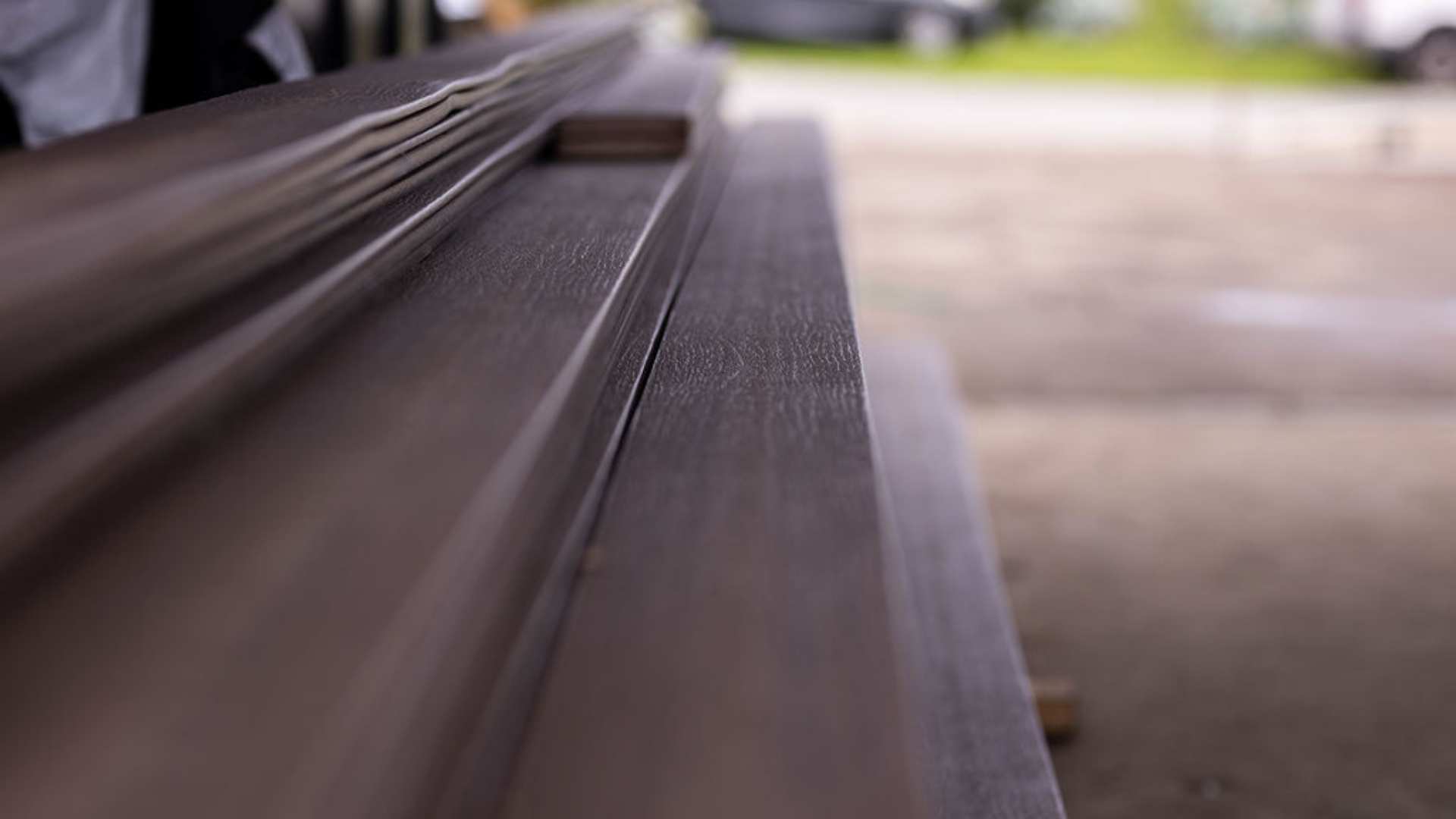
Hardwood Timber Decking in Bushfire Zones
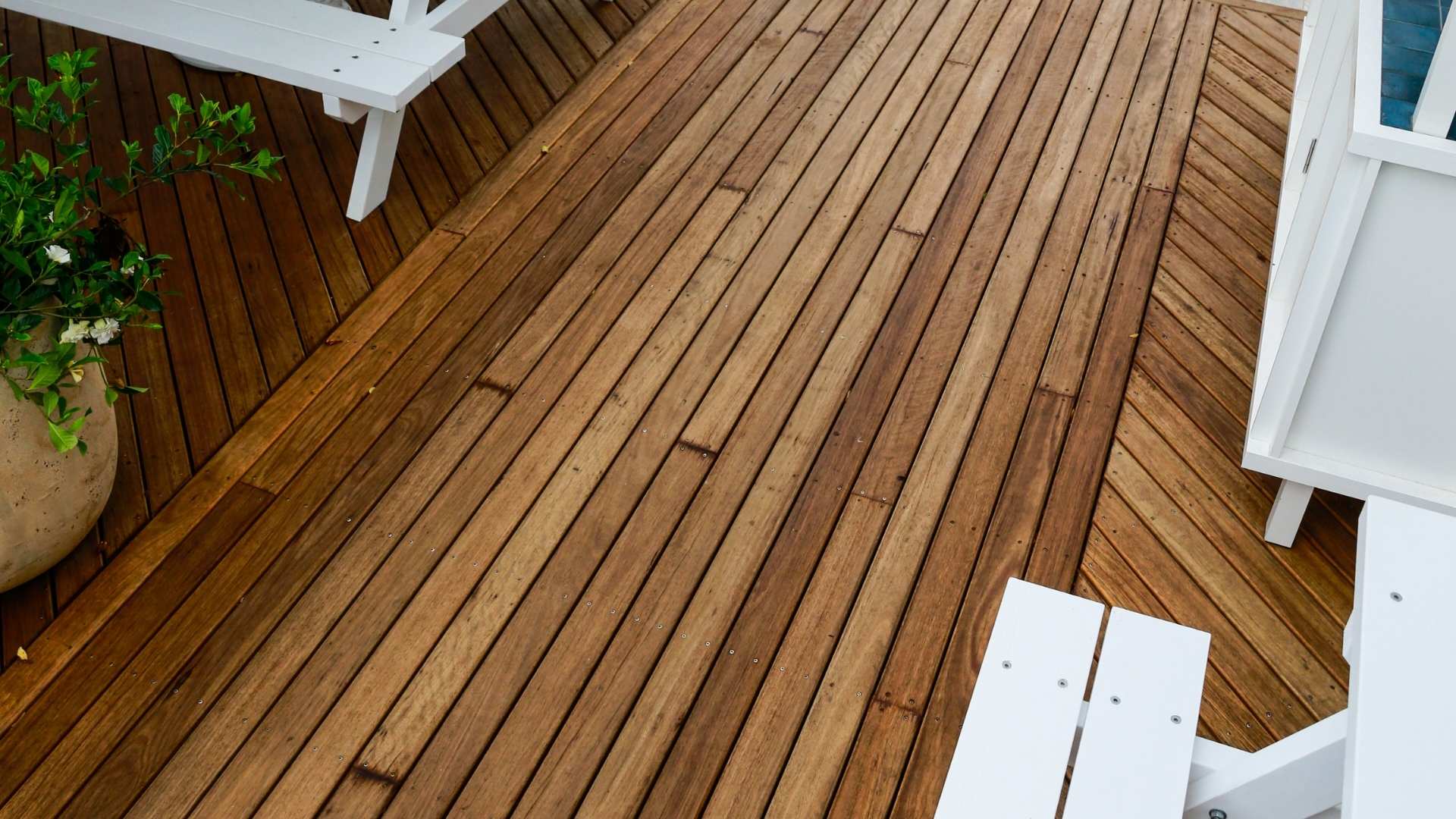
If the client is set on timber decking, choose dense Australian hardwoods such as Spotted Gum, Blackbutt, Ironbark or Jarrah. Merbau, although imported, is also a popular choice. These species have natural fire-resistant properties and can achieve BAL-29 compliance when installed in accordance with the Australian Standards.
Advantages:
- Natural Appeal: Nothing can compare to the warmth and character of genuine timber grain and texture
- Cooler Underfoot: Hardwood decking stays cooler in direct heat than composite products
- Repair: Timber decking boards can be sanded, refinished or replaced individually, extending the deck’s service life.
Considerations:
- Regular Maintenance: To maintain boards and prevent weathering, timber decking requires regular oiling or sealing
- Lifetime Cost: It is a lower upfront price, however, timber requires additional labour and materials throughout its lifespan
- Environmental Impact: Consider FSC or PEFC certified products to ensure the timber is sustainably sourced.
Choosing the Right Option for Your Project
The decision often comes down to BAL rating compliance, client preference, cost and maintenance. Always start with the BAL report and speak to your supplier about certified products and installation methods.
Explore the Bowens website for our wide range of timber decking and composite decking, or feel free to drop into your local Bowens store in Melbourne or regional Victoria for expert advice.
For more decking options, explore the blog “Timber Decking: Deck Out the Deck” for timber decking, and for composite decking, read our blog “A Guide to Composite Decking.”
Bowens Benefits
A loyalty account that gets you 5% off every shop
Ready to sign up?
Already have an account?
Login hereTrade Account
Custom pricing, 30-day trade credit + more
Ready to apply?
Already have an account?
Login here