

Why Subdeck Ventilation is Essential for Timber Decking
Maximise Your Timber Decks Lifespan
Proper subdeck ventilation is a critical factor in ensuring timber decking’s longevity. Without it, moisture can build up beneath the structure, leading to board distortion, rot, and long-term structural damage.
Bowens timber expert, Frank Di Stefano states, “Good subdeck ventilation is the key factor for a deck’s long-term performance.”
This is particularly important for decks built close to the ground, where poor airflow can quickly lead to timber failure.
Decks Built Without Subdeck Ventilation
We recently conducted an inspection where we found two timber decks constructed completely flush with the ground. The builders may not have been aware of the importance of subdeck ventilation or assumed air would flow through the small gaps between the boards. However, this assumption is incorrect. Airflow primarily comes through baseboards or designated ventilators, not between the decking boards themselves.
The consequences of this poor ventilation were clear:
- Native hardwood decking – Significant board distortion had occurred due to moisture buildup beneath the decking.
- Merbau decking – While the boards had not warped, moisture became trapped at the end joins, creating the perfect conditions for accelerated timber rot.
How Poor Subdeck Ventilation Affects Timber Decking
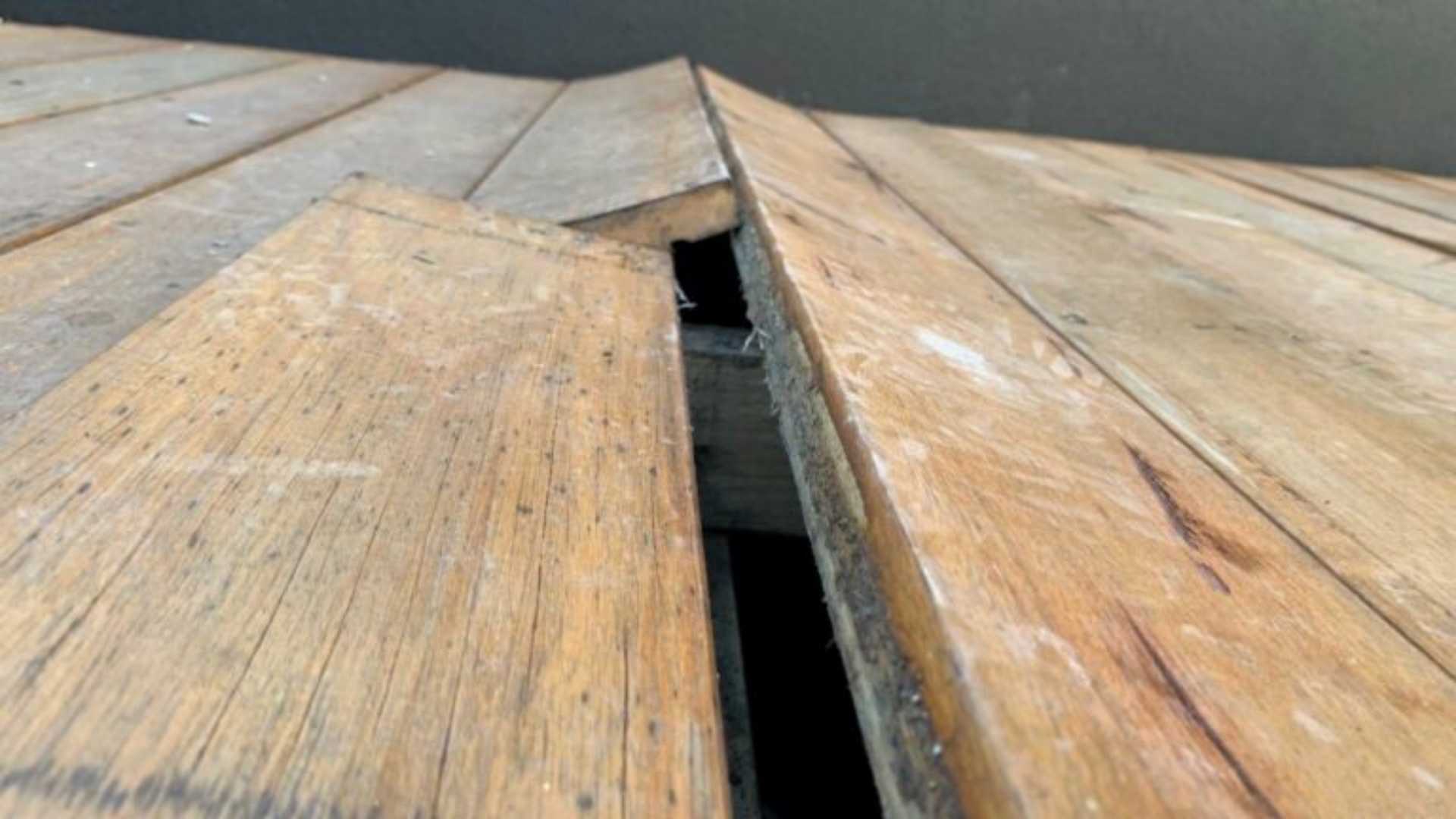
Wood is hygroscopic, meaning it absorbs and releases moisture based on its surroundings. In a poorly ventilated deck, the following can occur.
- The underside of the boards absorbs moisture from the damp ground
- The top of the deck is exposed to sunlight, causing uneven drying
- This imbalance leads to cupping, warping, and eventually, deck failure.
How to Ensure Proper Subdeck Ventilation
To prevent moisture-related issues, follow these best practices:
- Allow for cross-flow ventilation – Ensure air can move freely across the entire subdeck area, regardless of wind direction.
- Create entry and exit points – Openings should be placed on opposite sides of the deck to encourage airflow.
- Avoid airflow obstructions – Structural elements such as joists or noggins should not block ventilation.
- Use artificial subdeck ventilation if needed – In areas with persistent moisture, installing fans can create continuous airflow to dry out damp areas.
A well-ventilated deck prevents warping, rot, and structural failure. By prioritising airflow in your timber decking design, you can ensure a high-quality, long-lasting structure that will stand the test of time.
Bowens Range of Timber Decking
All Bowens timber decking products are available to order pre-oiled using Intergrain® Industrial Oil to protect and increase the product’s lifespan. Check out our pre-coated timber services page for more information.
For information on timber decking in general, discover our blogs ‘Decking Board Cupping’ or our video, ‘How to Build a Timber Deck that Lasts.’
To shop from our wide range of timber decking, explore the Bowens website, or visit one of our stores in Melbourne or regional Victoria today.
Bowens Benefits
A loyalty account that gets you 5% off every shop
Ready to sign up?
Already have an account?
Login hereTrade Account
Custom pricing, 30-day trade credit + more
Ready to apply?
Already have an account?
Login here